
James Hardie Site Prep & Utilities: The Garden Grove Owner’s Guide
James Hardie site prep and utility rough-in work in Garden Grove typically runs $4,800-$12,500 installed, depending on whether you’re tying into existing sewer laterals or running new electrical service from the pole. We stock James Hardie-compatible moisture barriers, flashing integration kits, and utility rough-in sleeves on our Garden Grove trucks, and most same-day assessments include a written price before we leave. Most owners discover their site prep is out of spec when the city plan-check returns a comment letter about waterproofing detail gaps, or when the James Hardie siding crew shows up and finds the WRB (water-resistive barrier) wasn’t lapped correctly over the utility penetrations.
Which James Hardie Models This Applies To
James Hardie doesn’t manufacture site prep or utility components directly, but their HardieZone system and installation requirements dictate exactly how utility penetrations, flashing, and drainage planes must integrate with their siding products. The critical match points are the HardiePanel vertical siding lines (HZ5 for wet climates, HZ10 for heat and humidity) and the HardiePlank lap siding used on most Garden Grove ADU projects. The HZ10 specification is what applies here, given Garden Grove’s combination of marine layer moisture and summer heat.
We identify the right integration kit by the job’s sheathing type (OSB vs. plywood vs. foam-backed) and the utility configuration: electrical conduit stub-outs, plumbing vent stacks, gas meter relocation sleeves, or HVAC mini-split line-set penetrations. Each requires a different James Hardie-approved flashing profile. The OEM James Hardie components (HardieFlash waterproofing membrane, HardieWrap weather barrier, ColorPlus touch-up kits for field cuts around utilities) run 15-20% more than quality aftermarket equivalents from Henry or DuPont Tyvek, but they carry the full James Hardie warranty when installed to their spec. For Garden Grove’s coastal-adjacent climate, we typically specify OEM on the first 4 feet and aftermarket above, since that’s where the moisture loading concentrates.
Signs Your James Hardie Site Prep & Utilities Is Failing
- Water staining on interior drywall below window or utility penetrations. This usually means the WRB wasn’t shingled correctly over the electrical conduit sleeve during original construction, or the James Hardie-recommended 6-inch overlap was cut short to save material.
- Efflorescence or soft OSB at the base of exterior walls. In Garden Grove’s older neighborhoods near Euclid and Chapman, we see this where the grade was raised after installation and the Hardie-recommended 6-inch clearance to finished grade was compromised, trapping moisture against the utility penetrations.
- Cracked caulk at siding-to-utility box transitions. James Hardie specifies elastomeric sealant, not standard silicone, at these joints; when the wrong product was used, UV degradation in Garden Grove’s summer sun opens gaps within 18-24 months.
- Mold odor in wall cavities after rain. This indicates the drainage plane failed at a plumbing vent stack penetration, often because the flashing boot was installed after the WRB rather than integrated with it per James Hardie’s sequence-of-work requirements.
- Plan-check rejection on permit application. The City of Garden Grove’s building department will flag incomplete moisture-management details on the permit set; we’ve seen this when the James Hardie installation instructions for utility integration weren’t included in the submittal package.
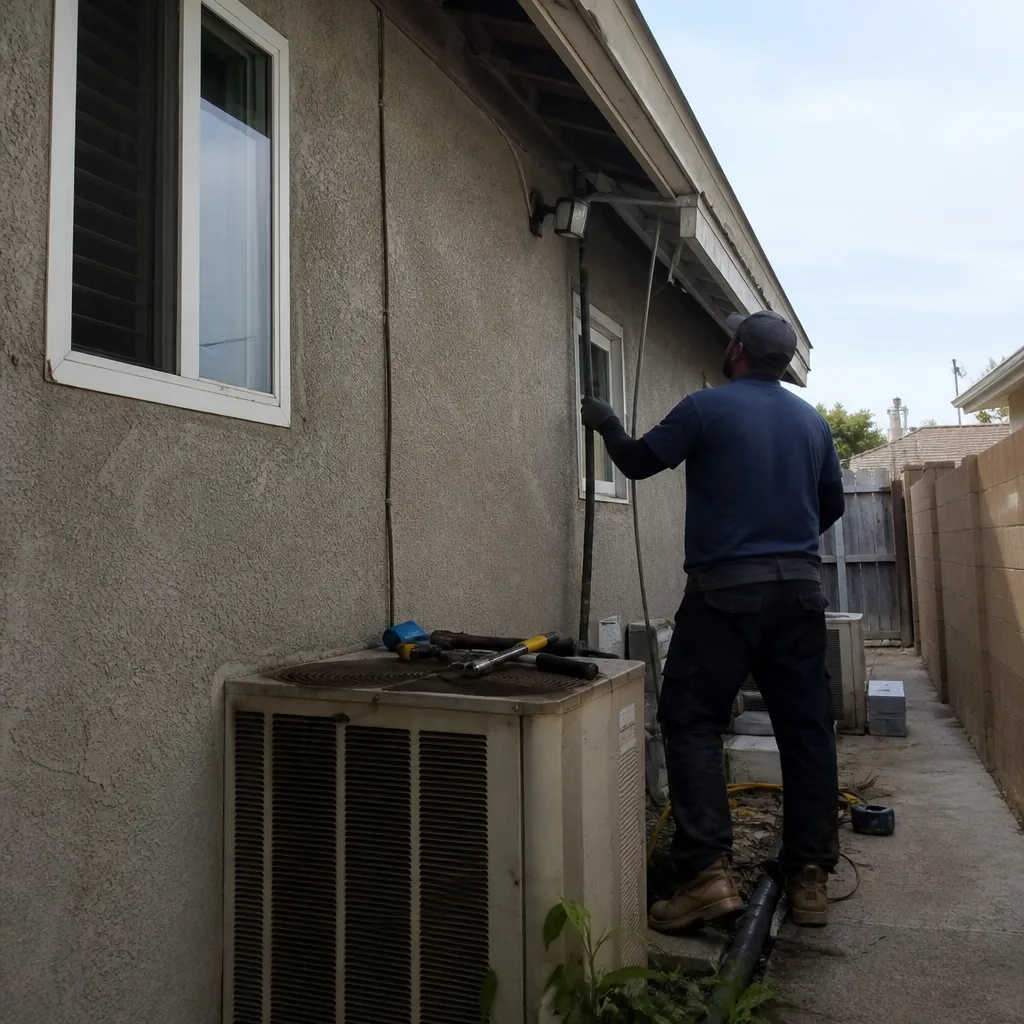 Before
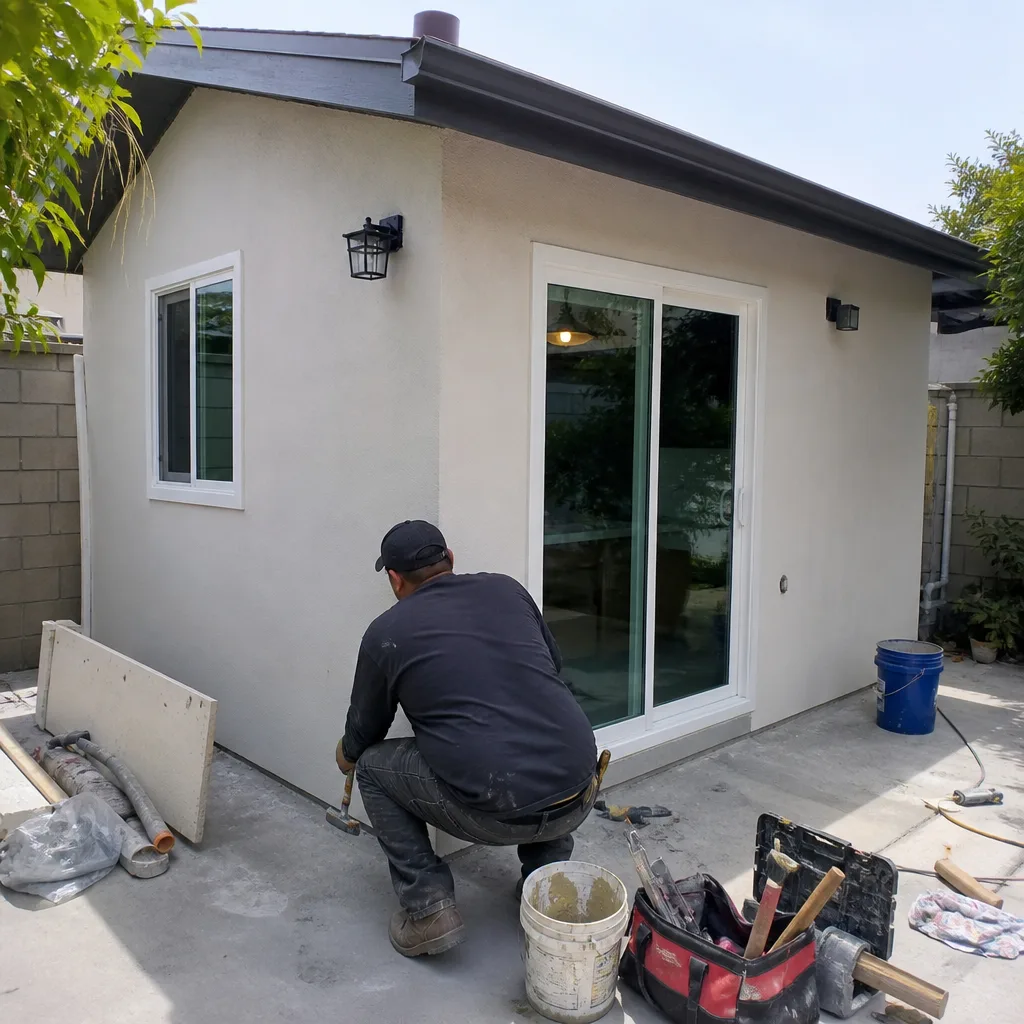 After
AfterReplacement Cost & What’s Included
In Garden Grove, James Hardie site prep and utility integration work typically ranges from $4,800 for localized flashing repair and WRB patching around existing penetrations, to $12,500 for full wall remediation with new moisture barrier, drainage mat, and re-detailed utility rough-ins on a detached ADU. The spread depends on three factors: whether we can work from the exterior only or need interior drywall removal, whether the original fasteners are galvanized (corroded) or stainless, and whether the utility connections need relocation to meet current Garden Grove setback requirements.
Every quote under Haven Standard Clause 1 is a written, line-item price before any work begins. That price includes parts (James Hardie OEM or specified equivalent), labor, permit coordination with the City of Garden Grove, and our 365-Day Done Right Promise. We also deliver a documented photo record of the existing condition, the opened wall, and the completed integration, so you have evidence of what was actually found.
DIY or Call Us?
An owner can safely check the obvious: grade clearance at the foundation, visible caulk condition at utility boxes, and whether downspouts dump water against the wall. What you cannot safely assess is the condition behind the siding without proper removal technique, James Hardie’s specific fastener pattern and exposure requirements, and the integrated flashing sequence that keeps water out of the wall cavity. Get the WRB lap wrong by even two inches at a plumbing vent, and you’ve created a funnel into the structure.
We’re not affiliated with James Hardie, but we’ve specified and coordinated their systems across 900+ ADU projects since 2015, including full integration with prefab units from Abodu, Cover, and Dvele where the factory rough-ins meet site-built conditions. If you’re seeing any of the symptoms above, call (657) 567-6590. We’ll assess it, photograph it, and give you a written price. The permit either approves or it doesn’t. Let’s make sure it does.
FAQs
Properly installed James Hardie moisture management with correct utility integration lasts 25-30 years in Garden Grove, though the coastal-adjacent marine layer accelerates fastener corrosion if galvanized rather than stainless was used. Call (657) 567-6590 for an exact assessment of your existing condition, estimates are free.
Localized repair is possible when the failure is isolated to a single penetration and the surrounding WRB is intact and properly lapped; full wall remediation is necessary when multiple utilities cluster or the original barrier was installed out of sequence. We determine which applies during our same-day assessment, documented with photos you receive.
Most localized utility integration repairs take 1-2 days; full wall remediation on a typical Garden Grove detached ADU runs 4-6 days, plus any City of Garden Grove inspection scheduling. Your written quote includes the full timeline before work starts, per Haven Standard Clause 1.
We stock HardieWrap, HardieFlash, ColorPlus touch-up, and the common flashing profiles for utility penetrations on every Garden Grove truck; specialized integration kits for less common James Hardie panel configurations are next-day from our Orange County supplier. If we don’t have it, we don’t start the clock until we do.
Written by Nadia Ellery, Owner, Ellery ADU Studio Garden Grove at Ellery ADU Studio Garden Grove, serving Garden Grove and nearby areas.