
HOA & Zoning Compliance in Garden Grove, CA
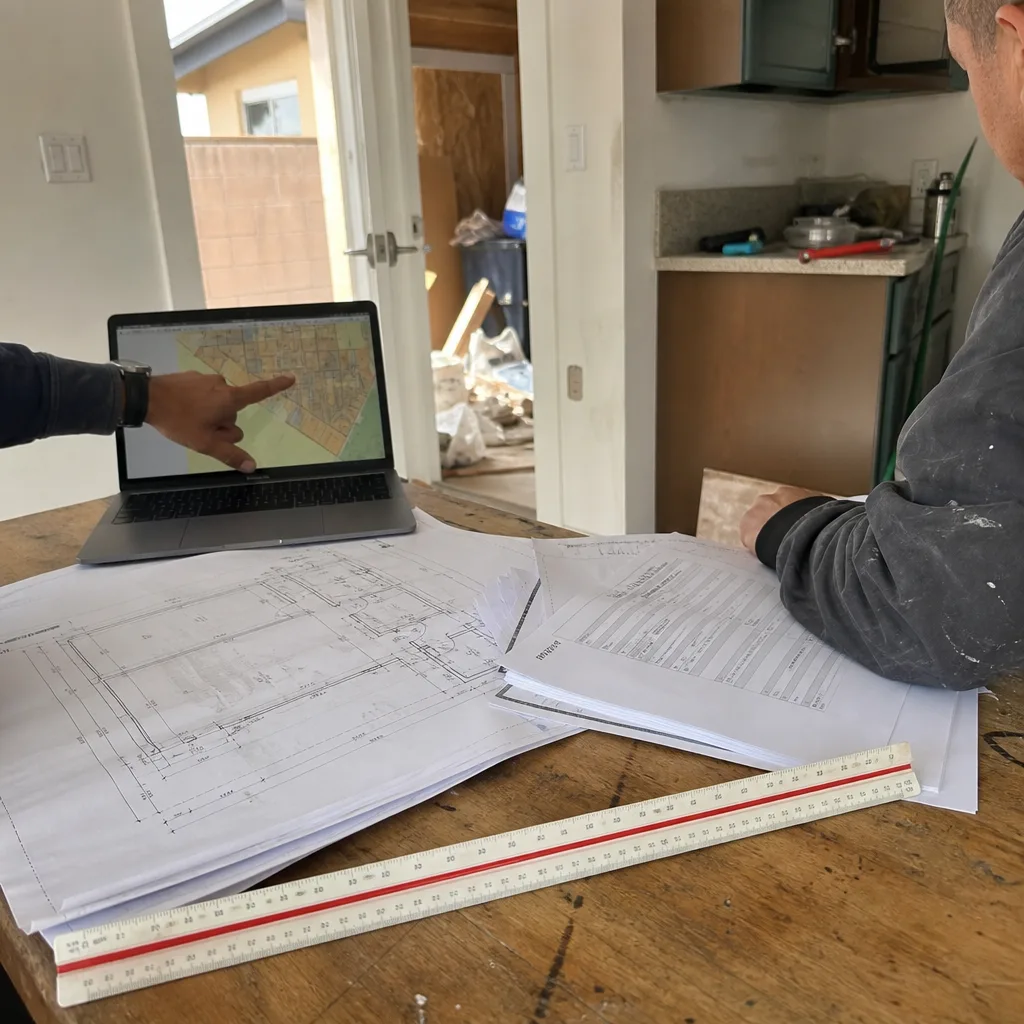
HOA and zoning compliance for an ADU in Garden Grove means reconciling three separate sets of rules: the City of Garden Grove’s municipal zoning code, Orange County’s overlay requirements where they apply, and your homeowners association’s CC&Rs – all before a single drawing goes to the Building Division. This is why our ADU Design & Permitting process starts with a full compliance review. Most ADU projects that stall in Garden Grove do so at exactly this intersection, because the city’s R-1 and R-2 zones carry specific setback requirements and lot-coverage caps that frequently conflict with what an HOA’s architectural committee expects to see.
At Ellery ADU Studio Garden Grove, we work through all three layers as part of the ADU Design & Permitting in Garden Grove process – one contract, one written price, no situation where the designer finishes their drawings and leaves you to figure out the HOA response on your own. Call (657) 567-6590 if you already have a written estimate from another firm; our free second opinion takes about thirty minutes and often identifies conflicts before they cost you a resubmission fee.
When You Need HOA & Zoning Compliance
- Your HOA sent back an architectural review application without approval. Garden Grove’s older planned communities – including several neighborhoods south of Trask Avenue and near the Brookhurst corridor – have CC&Rs written before California’s 2020 ADU preemption law. The association may have rejected your application citing rules that state law has since overridden.
- The city flagged a setback conflict on your preliminary plan check. Garden Grove’s R-1 zones require a minimum four-foot rear and side setback for ADUs under 850 square feet. If your structure sits within that envelope – or if your lot fronts an alley – the dimension triggers a different compliance path that needs to be documented correctly before a full permit submittal.
- Your lot is in a flood zone or near Garden Grove’s drainage channels. Properties near the flood-prone stretches along Chapman Avenue or in the Residential Estates zones near the 22 Freeway may carry FEMA overlay requirements that affect foundation design and finished floor elevation – details that belong in the permit set, not discovered at framing inspection.
- You want to convert an existing Tuff Shed or accessory structure into habitable space. Converting a pre-built structure to an ADU requires a zoning confirmation that the existing footprint, height, and setbacks comply with current code – and that the HOA has no prohibition the city’s preemption law does not already override.
- Your project involves James Hardie cementitious siding or another exterior material that differs from the primary dwelling. Many Garden Grove HOAs specify exterior materials or colors in their architectural guidelines. If your ADU uses James Hardie fiber cement where the main house is stucco, the architectural committee will require a material sample and a written justification before issuing approval.
- You’ve received conflicting advice about whether your HOA can legally block an ADU. Since AB 2221 and SB 897 took effect, California law limits what an HOA can prohibit – but HOAs retain authority over aesthetic design standards, materials, and color. Understanding which objections are legally enforceable and which are not is the first thing we sort out.
Our HOA & Zoning Compliance Process
-
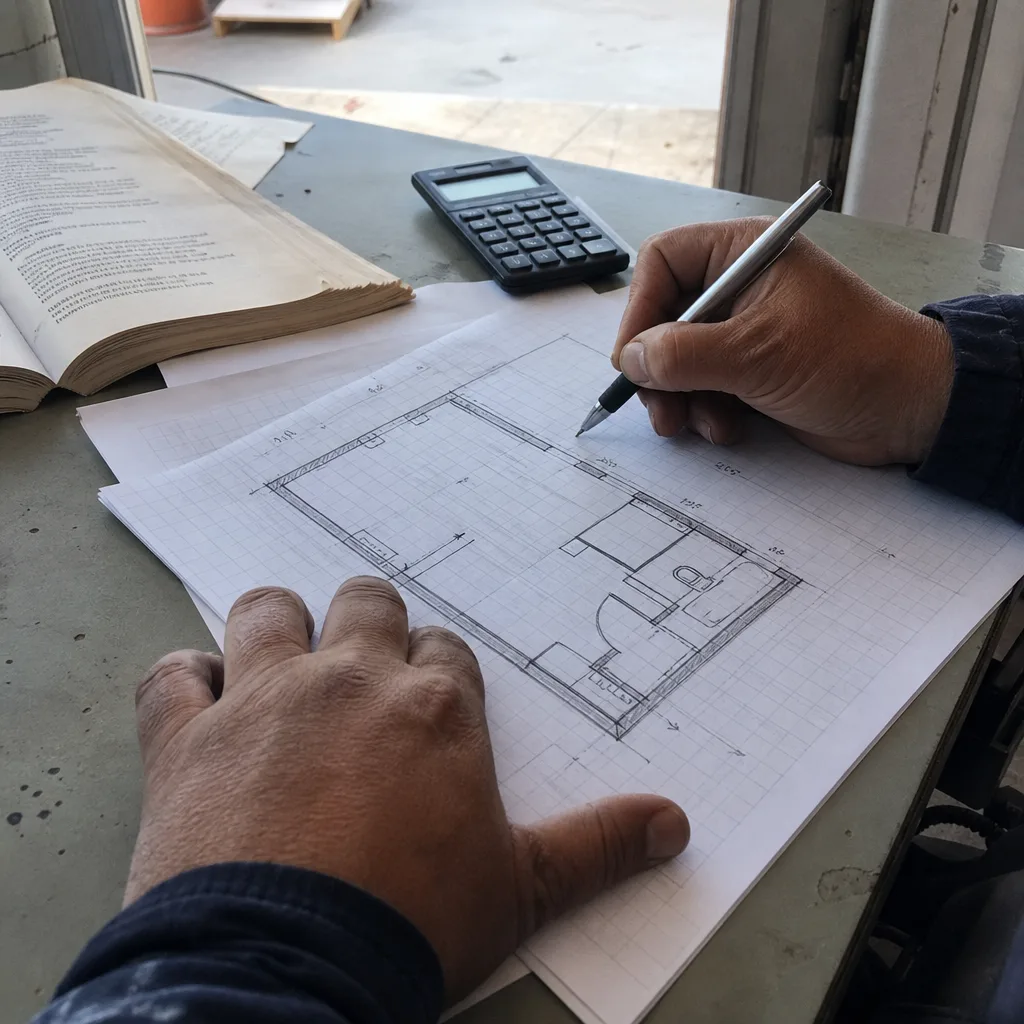
Zoning and CC&R Audit (Week 1)
We pull the current Garden Grove zoning designation for your parcel, confirm the applicable setback table, lot-coverage limit, and height cap, and read your CC&Rs against the current preemption statutes. A written summary – not a phone call – goes to you before any design work begins. This document is part of the Site Assessment and permit set Ellery produces for every project.
-
Conflict Mapping (Week 1-2)
We identify every point where HOA rules and city zoning diverge, and flag which HOA provisions state law has preempted versus which remain enforceable. In Garden Grove, the most common live conflicts involve exterior lighting standards, roofline height, and driveway surface materials in neighborhoods built between 1972 and 1995. Each conflict gets a resolution path in writing.
-
HOA Architectural Committee Package (Week 2-3)
We prepare the full architectural review submission your HOA requires: site plan, elevations, material specs, and a written legal summary citing the California Civil Code sections (4751 and related) that constrain what the committee can reject. If your HOA uses a third-party architectural review board – common in Garden Grove’s larger planned communities – we format the package to their submission template, not ours.
-
City Permit Set Coordination (Week 3-5)
Once HOA approval is in hand or a preemption position is documented, the compliance findings feed directly into the Permit Application drawings. Garden Grove’s Building Division accepts electronic submittals through their online portal; our drawings are prepared to the current California Building Code (2022 CBC) and Garden Grove’s local amendments. The permit set you receive is a documented record – stamped drawings, energy calculations, structural notes – not a summary.
-
Response to Plan Check Comments (Ongoing)
Garden Grove’s first-round plan check typically returns comments in four to six weeks. We respond to every comment as part of the original contract scope – no change orders for a second or third submittal round that results from city questions, not from scope changes. Under Haven Standard Clause 5 (No Surprises), the scope is locked at signing.
-
Permit Issuance and Handoff to Build
When the permit issues, the compliance documentation – HOA approval letter, city permit, stamped drawings – transfers to the build team under the same single contract. No translation meeting, no version-control gap between what the architect drew and what the crew receives. The 365-Day Done Right Promise backs the finished ADU against the permitted drawings in writing.
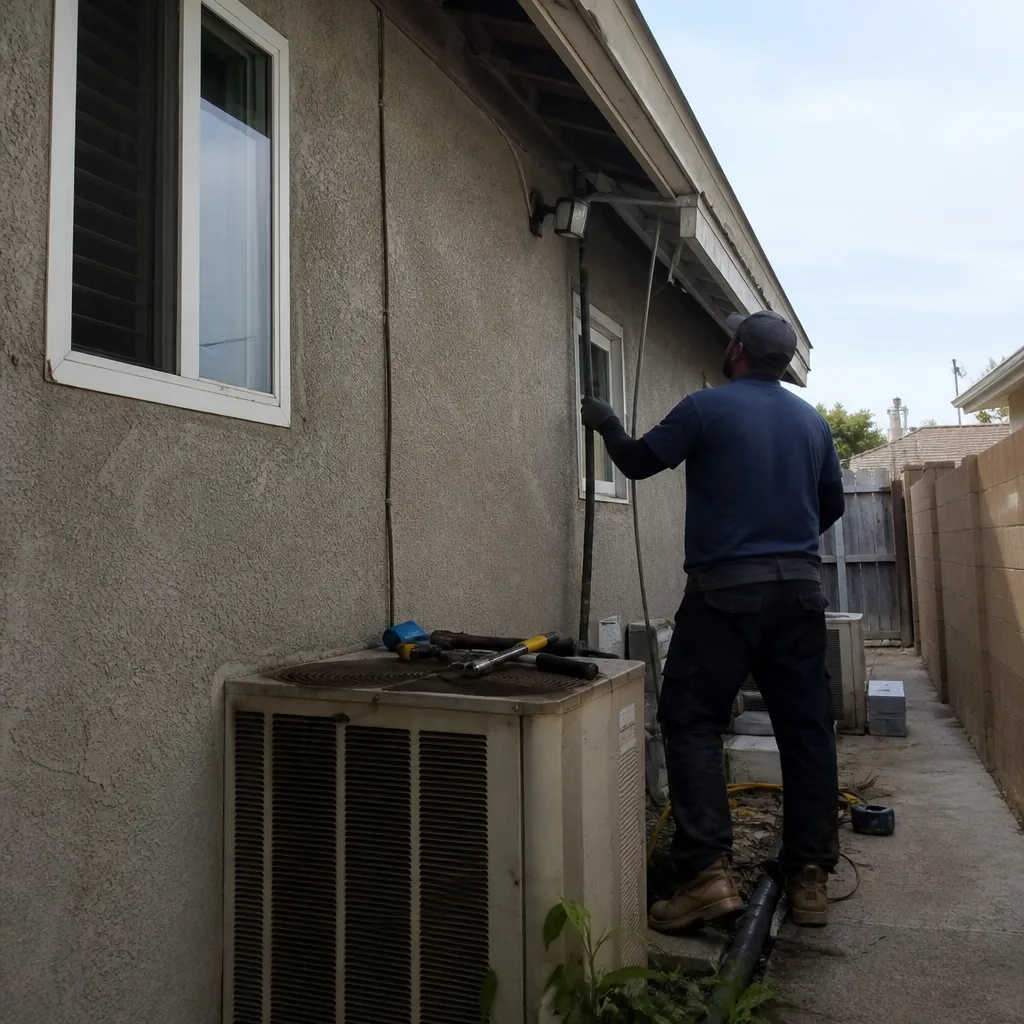 Before
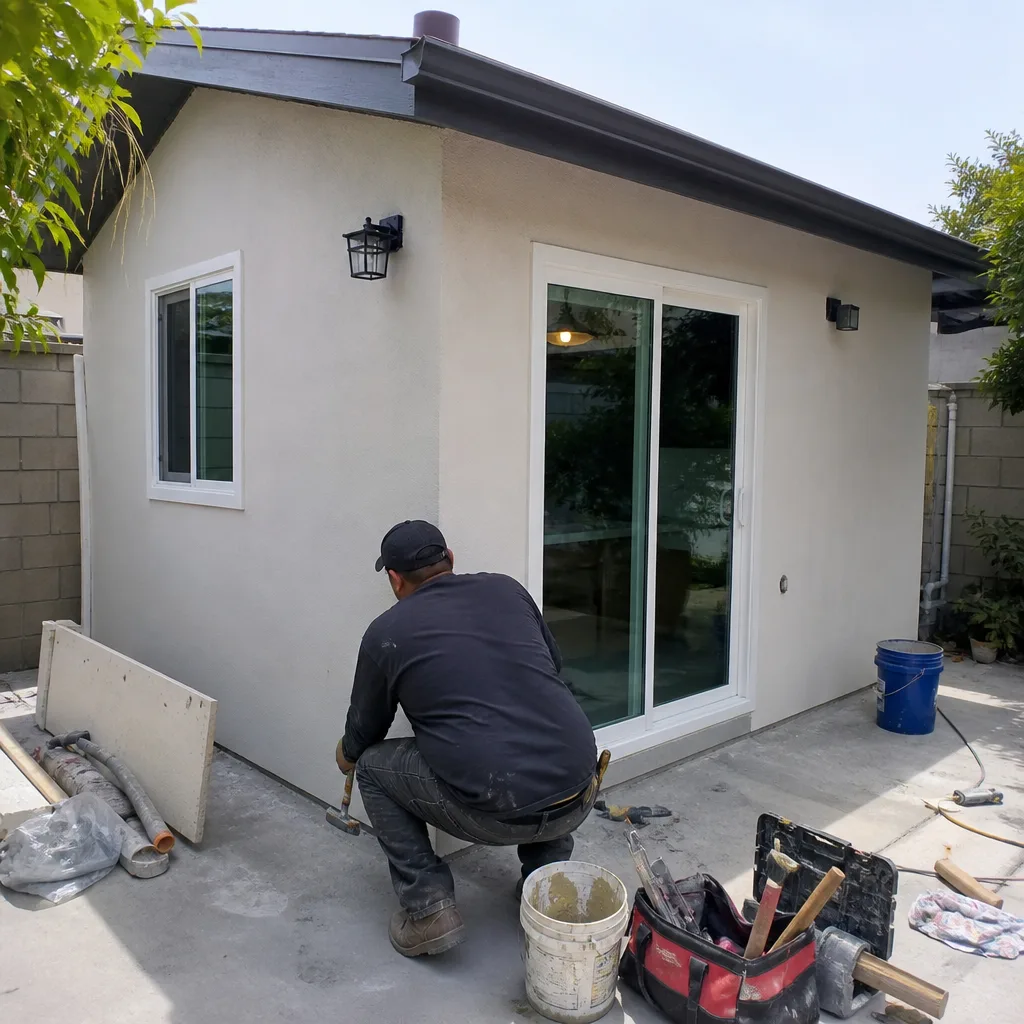 After
AfterHOA & Zoning Compliance Pricing in Garden Grove
HOA and zoning compliance work in Garden Grove is priced as part of the full ADU Design & Permitting in Garden Grove scope, not as a separate line item billed by the hour. The written price you receive before any work begins covers compliance documentation through permit issuance. That is Haven Standard Clause 1, and it applies to every project without exception.
That said, the compliance-related portion of a Garden Grove ADU permit package typically falls in these ranges:
| Compliance Scope | Typical Range | What Drives Cost |
|---|---|---|
| Zoning audit and conflict map only (no active HOA) | Included in permit set | Parcel complexity, overlay zones |
| HOA architectural committee package (standard CC&Rs) | $800-$1,400 | HOA’s submission requirements, number of revision rounds |
| HOA package with preemption legal documentation | $1,200-$2,200 | Degree of conflict between CC&Rs and state law; whether HOA engages legal counsel |
| FEMA flood-zone overlay documentation | $600-$1,100 | Zone classification (AE vs. X), elevation certificate requirement |
| Plan check response (per submittal round after first) | Included in contract scope | City comment complexity; scope changes are the only basis for a change order |
Full design-build ADU projects in Garden Grove – drawings, permitting, compliance, and construction – typically run $180,000-$320,000 for a new detached unit and $90,000-$160,000 for a garage conversion ADU, all-in from first drawing through final inspection. Every project starts with a written price. Call (657) 567-6590 to get that price on paper before committing to anything.
What Garden Grove’s Zoning Code Actually Says
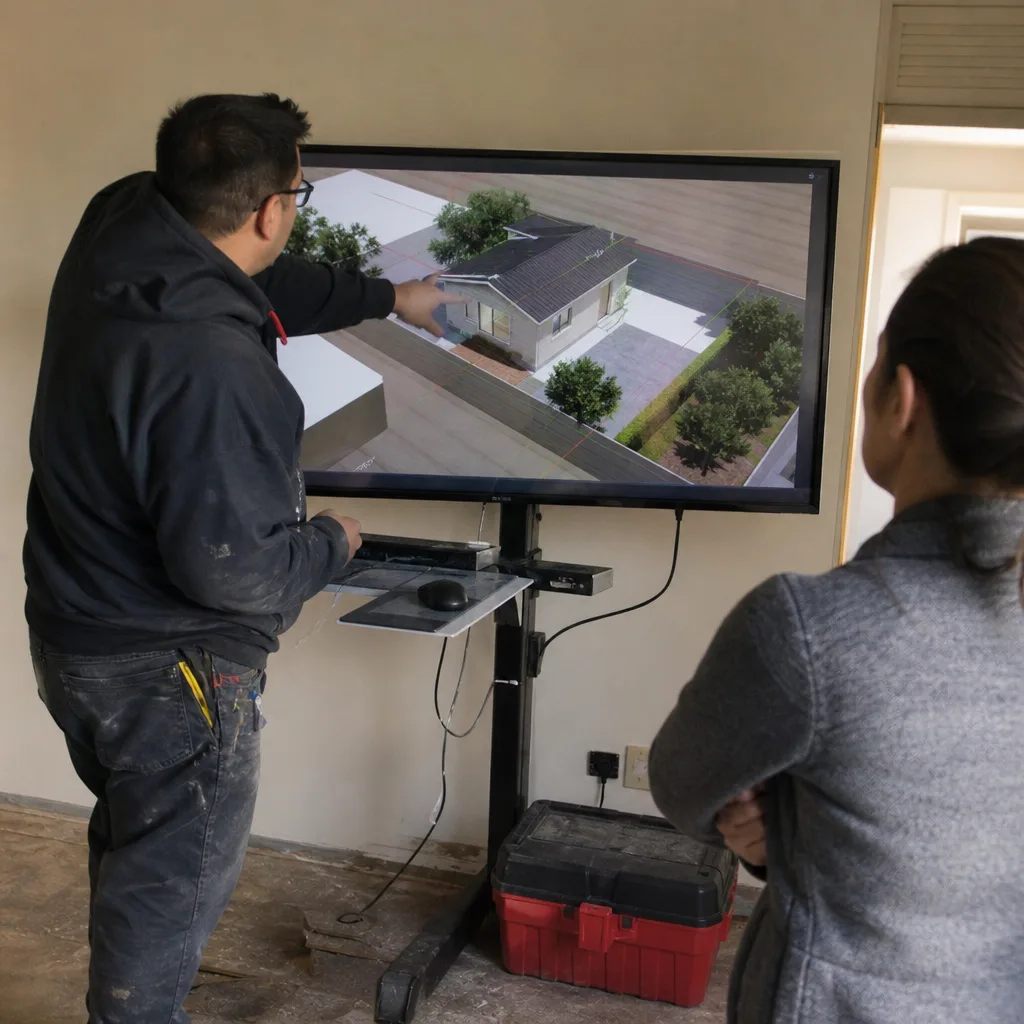
Garden Grove falls under Orange County’s general plan framework but administers its own zoning ordinance. A few specifics that affect ADU compliance more than most homeowners expect:
- Lot coverage: In R-1 zones, total lot coverage – primary dwelling plus ADU plus all accessory structures – cannot exceed 40% of the lot area. On a 6,000-square-foot lot, that is 2,400 square feet of covered space. If your existing house already covers 2,100 square feet, your ADU footprint is limited to 300 square feet before a variance conversation begins.
- Height limits: Detached ADUs in Garden Grove are capped at 16 feet in most residential zones. Two-story detached ADUs are permitted only where the lot and zone allow, and the HOA’s view-protection provisions – if any – remain enforceable within the 16-foot envelope.
- Accessory dwelling unit amnesty: Garden Grove, like other Orange County cities, allows unpermitted existing structures to apply for ADU permits under the state’s amnesty provisions. The compliance path for an amnesty conversion is more involved, but it is available – and the zoning audit we conduct at the start of every project identifies whether amnesty applies to your parcel.
- Alley-adjacent lots: Several blocks in the older Garden Grove neighborhoods east of Euclid Street have rear-alley access. For these parcels, the rear setback measurement and the ADU entrance requirements differ from a standard lot. This is a common source of plan check comments and worth confirming in the audit phase.
What California Law Lets Your HOA Control – and What It Doesn’t
Since 2020, California Civil Code Section 4751 has prohibited HOAs from enforcing rules that effectively ban or unreasonably restrict ADU construction. But “unreasonably restrict” has limits. Here is the practical breakdown for Garden Grove homeowners:
- HOA cannot block: ADU construction outright, impose a fee for ADU approval that exceeds actual administrative costs, or require design features that add more than $1,000 to construction cost without a legitimate architectural purpose.
- HOA can still require: Exterior materials that match or complement the primary dwelling, paint colors within an approved palette, roofline design that aligns with neighborhood character, screening of mechanical equipment (HVAC condensers, tankless water heater venting), and landscaping around the ADU perimeter.
- Gray zone: Minimum size requirements, parking provisions tied to ADU occupancy, and rental restrictions. California law has progressively narrowed HOA authority in these areas, but specific HOA language sometimes creates a legitimate dispute that requires legal documentation to resolve – not just a citation from us, but a written position the HOA’s own counsel has to address.
In Garden Grove, we have seen HOA architectural committees in communities near West Garden Grove and the Brookhurst-Westminster boundary attempt to enforce pre-2020 rules that state law has since preempted. The solution is documentation, not negotiation. We prepare the written legal summary; the HOA decides how to respond.
FAQs – HOA & Zoning Compliance
Can my Garden Grove HOA legally stop me from building an ADU?
No – a California HOA cannot prohibit ADU construction outright as of January 2020 under Civil Code Section 4751. What the HOA can do is require compliance with reasonable design standards: exterior materials, colors, roofline height within the city’s cap, and landscaping. If your HOA has rejected an ADU application citing a blanket prohibition, that rejection is likely unenforceable. The step is to document the preemption position in writing and respond through the architectural committee’s formal process – which is exactly what Ellery’s compliance package covers. Call (657) 567-6590 and we’ll review your HOA’s specific language at no charge before any work starts.
How long does the HOA approval process take in Garden Grove?
Most Garden Grove HOAs complete an architectural review in 30 to 60 days once a complete package is submitted. Incomplete submissions – missing material specs, no elevations, no site plan – restart the clock. Our architectural committee package is assembled to the HOA’s own submission checklist, which cuts resubmission rates substantially. If the HOA engages its own legal counsel to respond to a preemption claim, add 30 to 45 days. We build both timelines into the project schedule at the outset so neither outcome is a surprise.
What happens if my ADU design violates Garden Grove’s lot coverage limit?
A lot coverage violation identified at the zoning audit stage changes the design – specifically, the ADU footprint, the roof overhangs counted toward coverage, and sometimes the primary dwelling’s existing covered structures (attached garages, covered patios). If the violation surfaces at plan check instead – because the audit was skipped or incomplete – you face a redesign mid-submittal, which costs time and money. Ellery’s zoning audit at Week 1 is specifically structured to catch coverage conflicts before the design is finalized. Under Haven Standard Clause 5, a conflict we identify during audit is resolved within the original contract scope.
Do I need HOA approval before submitting to the Garden Grove Building Division?
The city does not require HOA approval as a condition of permit issuance – these are parallel tracks, not sequential ones. You can submit to the Building Division while the HOA architectural committee review is still in progress. In practice, we often run both simultaneously to compress the overall timeline. What you cannot do is begin construction without HOA approval if your CC&Rs require it, because doing so creates an HOA violation that may require you to remove or modify completed work. The compliance sequence matters, and we document it in writing for every project. Call (657) 567-6590 to get a written scope that covers both tracks before any money changes hands.
Key Takeaways
- Garden Grove ADUs must satisfy city zoning, Orange County overlay requirements where applicable, and HOA CC&Rs simultaneously – these are not the same document and they frequently conflict.
- California law limits what an HOA can prohibit, but does not eliminate HOA authority over design standards, exterior materials, and landscaping – knowing the difference prevents compliance errors in both directions.
- The compliance work Ellery produces is documented: written zoning audit, conflict map, HOA submission package with legal citations, and a permit set stamped for Garden Grove Building Division submittal.
- Every price is in writing before work begins, per Haven Standard Clause 1. HOA compliance scope and plan check response rounds are included in that written price, not billed as extras.
- The 365-Day Done Right Promise means the finished ADU is built to the permitted drawings – the compliance documentation is the baseline that makes that promise enforceable.
Get a Written Scope Before You Commit to Anything
If you’re working through HOA pushback or trying to understand what Garden Grove’s zoning code actually allows on your specific parcel, the place to start is a documented conversation – not a phone estimate. Nadia Ellery and the Ellery ADU Studio team have worked through HOA compliance on projects across Garden Grove’s older planned communities and newer infill lots since 2015. The zoning audit, the conflict map, and the written price all come before any design work starts.
Call (657) 567-6590. A live person answers. If you already have a written estimate from another firm, bring it – the free second opinion is available on any written scope and typically takes about thirty minutes. No voicemail queue, no callback promise that doesn’t materialize.
Written by Nadia Ellery, Owner at Ellery ADU Studio Garden Grove, serving Garden Grove.