
Last updated September 25, 2026
DIY vs Professional ADU: The Garden Grove Homeowner’s Decision Guide
Most Garden Grove homeowners assume the DIY-versus-professional ADU question comes down to sweat equity and material markup. It doesn’t. California’s owner-builder exemption under Business & Professions Code § 7044 creates a legal framework where self-performing the wrong scope doesn’t just risk a failed inspection - it can void your homeowner’s insurance, expose you to personal liability for uninsured workers, and lock you into a five-year resale disclosure that tanks your property value. In this guide, we’ll walk through exactly what you can legally self-perform in Garden Grove, what requires a C-licensed professional, where the real savings hide, and where the risk transfers make professional design-build the rational choice for a six-figure asset. For how to hire an ADU contractor in Garden Grove: a step-by-step guide, see our dedicated resource.
Quick Answer
True DIY ADU construction in Garden Grove is legally limited to finish work and site management - electrical, plumbing, framing, and structural work all require C-licensed subcontractors even under the owner-builder exemption. Most homeowners who attempt full self-management spend 14-24 months from permit to certificate of occupancy, versus 8-12 months with a design-build studio, and rarely save more than 8-12% after paying for separate design, permit expediting, and builder’s risk insurance.
Table of Contents
- The Legal Boundary: What California’s Owner-Builder Exemption Actually Allows
- The Insurance Gap: What Your Homeowner’s Policy Won’t Cover
- The Permit-Set Problem: Why Drawings Aren’t Optional
- Realistic Self-Perform Savings vs. Actual Risk Exposure
- The Design-Build Alternative: Risk Transfer by Contract
- Garden Grove Specifics: Climate, Code, and Market Context
- Common Mistakes to Avoid
- When to Call a Professional
- Frequently Asked Questions
 Before
 After
AfterThe Legal Boundary: What California’s Owner-Builder Exemption Actually Allows
California Business & Professions Code § 7044 lets a homeowner act as their own general contractor on a single-family residence they intend to occupy. The exemption is narrower than most Garden Grove homeowners realize, and the penalties for crossing its boundaries are severe.
Here’s what you can legally self-perform:
- Project management and scheduling of licensed subcontractors
- Finish carpentry, painting, and interior trim
- Landscaping, hardscaping, and exterior grading (non-structural)
- Tile setting, flooring installation, and fixture hanging
- Cabinet installation and hardware mounting
Here’s what requires a C-licensed subcontractor regardless of owner-builder status:
- Electrical (C-10): All rough-in, panel upgrades, and final connections
- Plumbing (C-36): Water, sewer, and gas lines; water heater installation
- HVAC (C-20): Ducting, mini-split systems, and ventilation
- Structural/framing (C-5/C-6): All load-bearing elements, shear walls, and hold-downs
- Concrete (C-8): Foundation work, stem walls, and flatwork tied to structure
- Roofing (C-39): Any work on weatherproofing assemblies
The exemption’s hidden cost: personal liability. When you act as owner-builder, you become the statutory employer of every worker on site. That means workers’ compensation claims fall to you if an uninsured subcontractor’s employee gets injured. In Garden Grove, where many residential subcontractors operate with minimal coverage, this exposure is real and routinely underestimated.
The five-year resale disclosure is equally consequential. Under § 7044, you must disclose the owner-builder status to any buyer within five years of completion. Most buyers’ lenders treat this as a material defect, requiring third-party inspections that delay or derail sales. We’ve seen this clause alone cost Garden Grove sellers $15,000-$30,000 in price reductions or carrying costs.
The city of Garden Grove enforces these requirements through its Community Development Department, which cross-references contractor license numbers against the CSLB database at plan check. Attempting to pull permits with an unlicensed trade contractor will halt your project at intake, not at inspection.
The Insurance Gap: What Your Homeowner’s Policy Won’t Cover
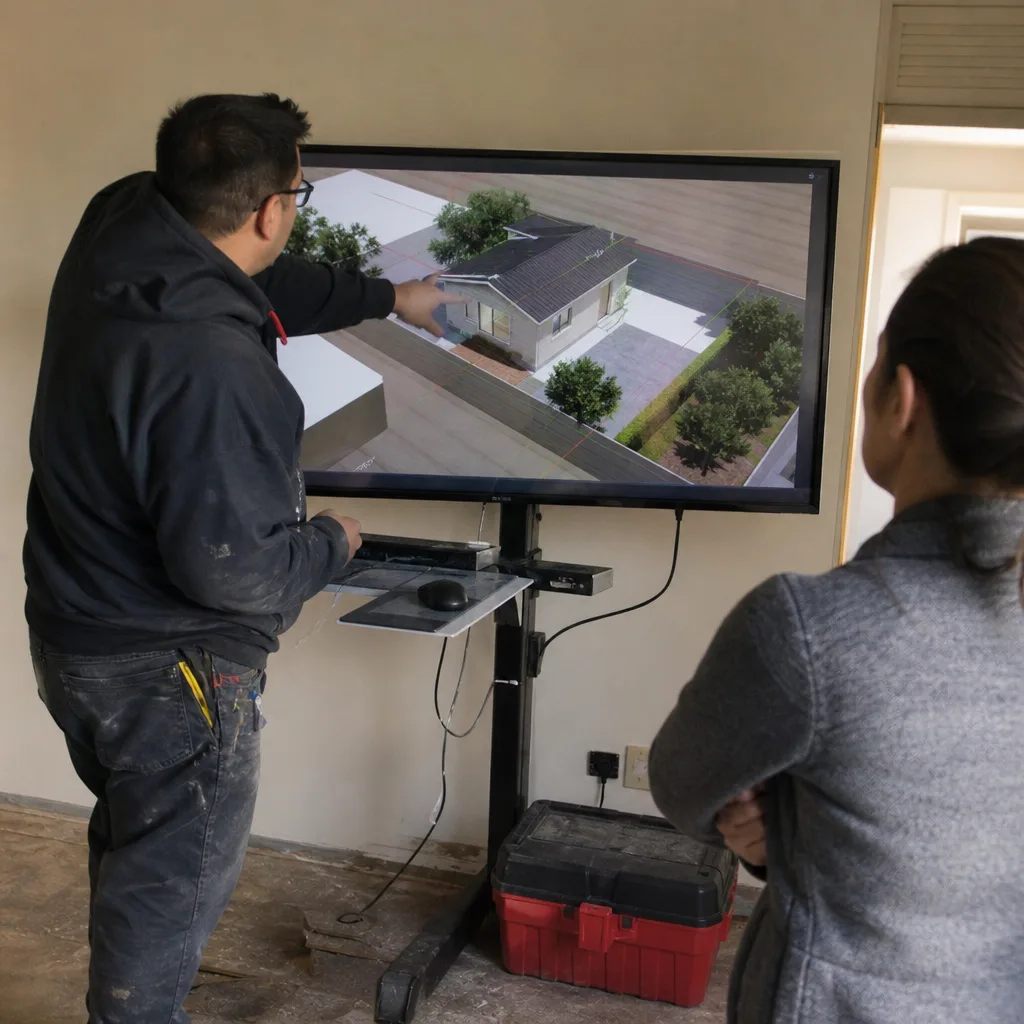
Standard homeowner’s insurance policies in California contain explicit exclusions for construction activities performed by or under the direction of the insured homeowner. This isn’t a gray area - it’s a standard ISO form exclusion that virtually every carrier uses.
What this means in practice for a Garden Grove owner-builder:
- Your dwelling coverage pauses for the construction zone. If a fire starts during electrical rough-in and spreads to your main house, your carrier can deny the entire claim based on the “business pursuits” or “building operations” exclusion.
- Theft of materials is your loss. Lumber, windows, and appliances staged on site are not covered under standard personal property limits during active construction.
- Injury to workers triggers your personal liability, not your policy. If an uninsured painter falls from a ladder, your umbrella policy likely excludes “employer’s liability” - leaving your assets exposed.
The alternative is a builder’s risk policy, which runs $1,200-$2,800 for a typical Garden Grove ADU project valued at $200,000-$400,000. But here’s the catch: most builder’s risk carriers require that all trade work be performed by C-licensed contractors with active workers’ compensation. The owner-builder exemption itself can disqualify you from the very policy you’d need to cover the risk it creates.
We’ve reviewed hundreds of ADU projects in Garden Grove since 2015, and the insurance gap is the single most common surprise for self-managing homeowners. They budget for concrete and lumber, not for a $15,000 liability judgment from a subcontractor’s uninsured helper.
The Permit-Set Problem: Why Drawings Aren’t Optional
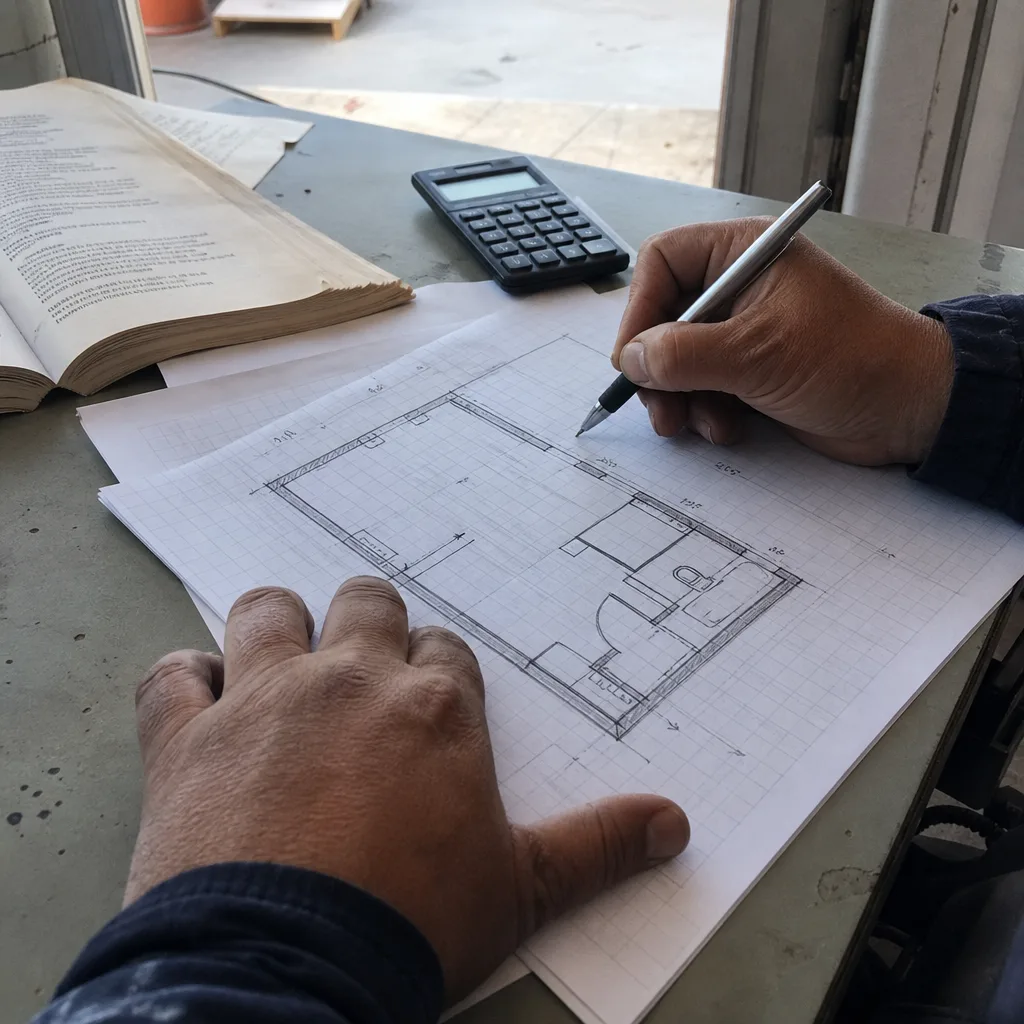
Even if you accept the liability exposure and navigate the licensing requirements, you still need a permit-quality drawing set to get through Garden Grove plan check. California’s Title 24 energy code, the California Residential Code, and local amendments require documented compliance that hand sketches cannot satisfy.
A complete ADU permit set for Garden Grove includes:
- Site plan showing setbacks, easements, and utility locations
- Floor plans with egress window sizing and door swing clearances
- Elevations with material callouts and height compliance
- Structural calculations for lateral loads (wind, seismic) - Garden Grove sits in a moderate seismic zone with site-specific soil considerations
- Title 24 energy compliance documentation (CF-1R form)
- Green building checklist compliance
- Mechanical, electrical, and plumbing plans (MEP)
The cost to produce this separately from construction: $8,500-$18,000 for a licensed designer or architect, plus $2,000-$4,500 for structural engineering, plus $1,500-$3,000 for Title 24 energy modeling. Total: $12,000-$25,500 before you pour a single footing.
And the drawings are only the beginning. Garden Grove’s Community Development Department requires correction responses to plan check comments, typically 2-4 rounds. Each round means revised sheets, re-submittal fees, and schedule delay. A self-managing homeowner without plan-check experience often adds 3-6 months at this stage alone.
At ADU Design & Permitting in Garden Grove, we treat the permit set as the core product because it is. Our drawings are produced in-house, coordinated with our construction team before submittal, and backed by the 365-Day Done Right Promise if field conditions require revision.
Realistic Self-Perform Savings vs. Actual Risk Exposure
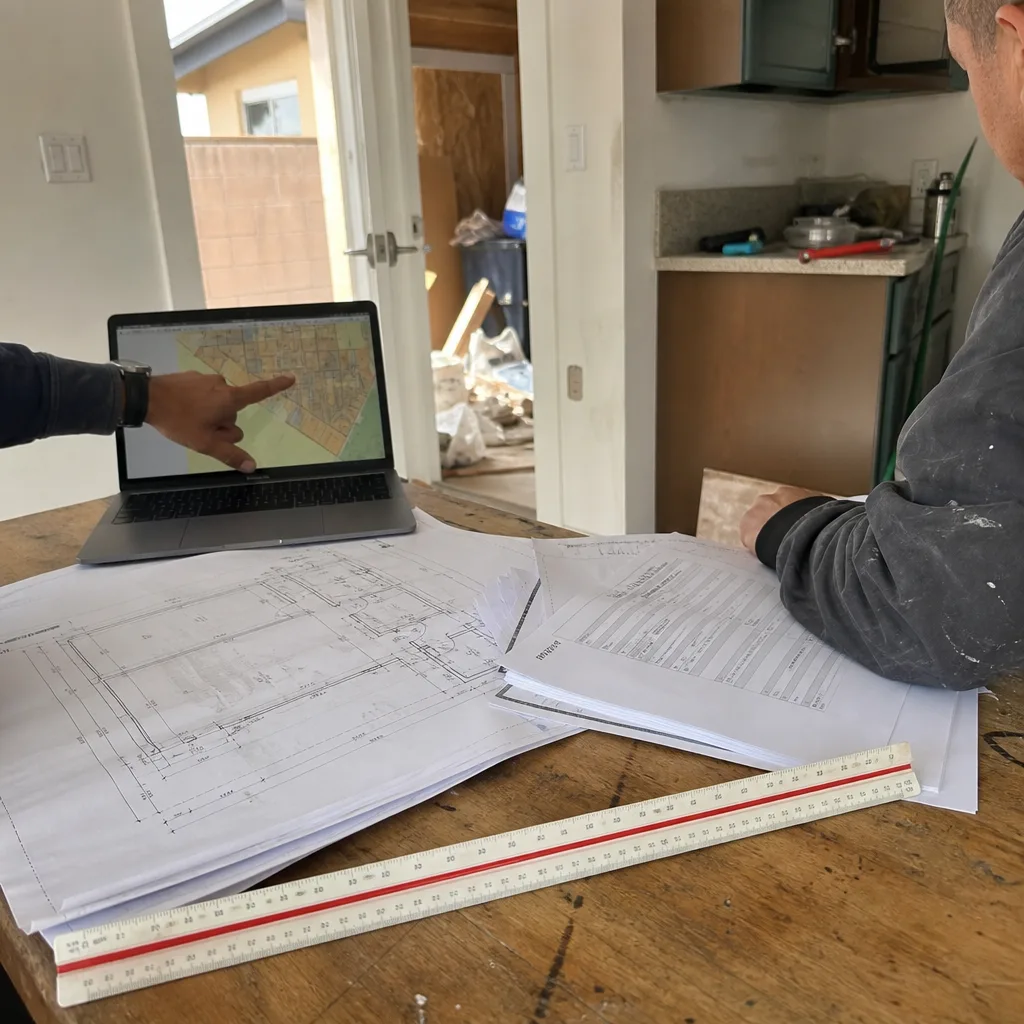
Let’s separate myth from math. Owner involvement can reduce costs, but only in specific categories and only with realistic accounting of the trade-offs.
Where self-perform genuinely saves money:
| Category | Typical Professional Cost | Self-Perform Material Cost | Realistic Savings |
|---|---|---|---|
| Interior painting | $3,500-$6,000 | $800-$1,400 | $2,700-$4,600 |
| Finish carpentry (trim, baseboards) | $4,500-$8,000 | $1,200-$2,200 | $3,300-$5,800 |
| Landscaping and hardscaping | $6,000-$12,000 | $2,500-$5,000 | $3,500-$7,000 |
| Tile installation (floors, backsplash) | $5,000-$9,000 | $1,800-$3,500 | $3,200-$5,500 |
| Fixture and hardware installation | $2,500-$4,500 | $400-$800 | $2,100-$3,700 |
Where self-perform creates cost and liability:
| Category | Typical Risk/Cost | Why It Goes Wrong |
|---|---|---|
| Electrical rough-in | $8,000-$25,000 in rework, fire damage, or injury | GFCI arc-fault requirements change frequently; Garden Grove inspectors flag neutral-ground bonding errors that homeowners miss |
| Framing and shear walls | $12,000-$40,000 in structural repair | Hold-down spacing, sill plate anchoring, and shear wall nailing patterns are unforgiving; one missed fastener pattern fails inspection |
| Plumbing rough-in | $5,000-$15,000 in flood damage | Pressure testing failures, improper venting, and cross-connections are common owner-builder errors |
| Foundation and flatwork | $10,000-$30,000 in demolition and re-pour | Expansive soil in parts of Garden Grove requires specific reinforcement; city engineers reject non-compliant rebar spacing |
| Permit expediting and plan check | $4,000-$8,000 in carrying costs per month of delay | Unfamiliarity with Garden Grove’s submittal portal and correction protocols adds 3-6 months |
The net calculation: a homeowner who self-performs all finish work and manages subcontractors for licensed trades might save $12,000-$25,000 on a $250,000 project. But that savings is consumed by separate design costs ($12,000-$25,500), builder’s risk insurance ($1,200-$2,800), permit expediting delays ($4,000-$8,000/month), and the unquantified liability exposure. In our experience, the true savings rate for competent owner-builders who complete the project is 3-7%, not the 20-30% imagined.
And that assumes completion. We’ve taken over six stalled owner-builder projects in Garden Grove since 2020, all abandoned after 12-18 months when the permit expired, the financing ran out, or a subcontractor dispute froze progress. The cost to rescue a half-built ADU typically runs 15-25% above fresh construction because of demolition, re-design, and code compliance updates.
The Design-Build Alternative: Risk Transfer by Contract
The alternative to owner-builder management is a single-contract design-build relationship that transfers five categories of risk from the homeowner to the studio: design coordination, permit responsibility, trade licensing, schedule certainty, and warranty enforcement.
At Ellery ADU Studio Garden Grove home, this transfer is documented in The Haven Standard, not promised in a sales conversation. The clauses that matter for the DIY-versus-professional decision:
Clause 1 - Written Price Before Any Work Starts. The scope, specifications, and total price are fixed at contract signing. No allowance items that balloon. No “discoveries” that trigger change orders. The price you see is the price you pay, which means your financing is secure and your return-on-investment calculation is reliable.
Clause 3 - Documented Photo Record on Every Visit. You receive timestamped photographs of field conditions, work-in-place, and inspection results. This isn’t for marketing - it’s evidence that the built ADU matches the permitted drawings, which protects your resale value and satisfies lender requirements.
Clause 5 - No Surprises. The scope is locked at signing. No door-side upsells, no scope creep, no “while we’re here” additions. If our team misses a line item in the original scope, we absorb it.
Clause 7 - 365-Day Done Right Promise. If the finished ADU is not built to the permitted drawings, we make it right - in writing, before the project starts. This covers structural, MEP, and finish elements for a full year after certificate of occupancy.
Clause 9 - CO Responsibility. We pull the permit, coordinate inspections, and deliver the certificate of occupancy. You don’t interface with Garden Grove’s building department except for the final walkthrough if you choose to attend.
The risk transfer is the product. A homeowner who values their time, their liability exposure, and their property’s long-term marketability is purchasing certainty, not just construction labor. The 8-12% premium over theoretical self-build savings buys: eliminated personal liability for worker injuries, continuous property insurance coverage, a documented warranty for resale, and 6-12 months of earlier rental income or family use.
For homeowners considering prefab or modular systems, we specify and coordinate New Detached ADU in Garden Grove projects using Plant Prefab, Tuff Shed, and James Hardie systems within the same single contract. The factory build reduces weather delay, but the site prep, foundation, utility tie-in, and finish coordination still require the same licensed trades and permit management. Our design-build model absorbs that complexity without adding vendor relationships for the homeowner to manage.
Garden Grove Specifics: Climate, Code, and Market Context
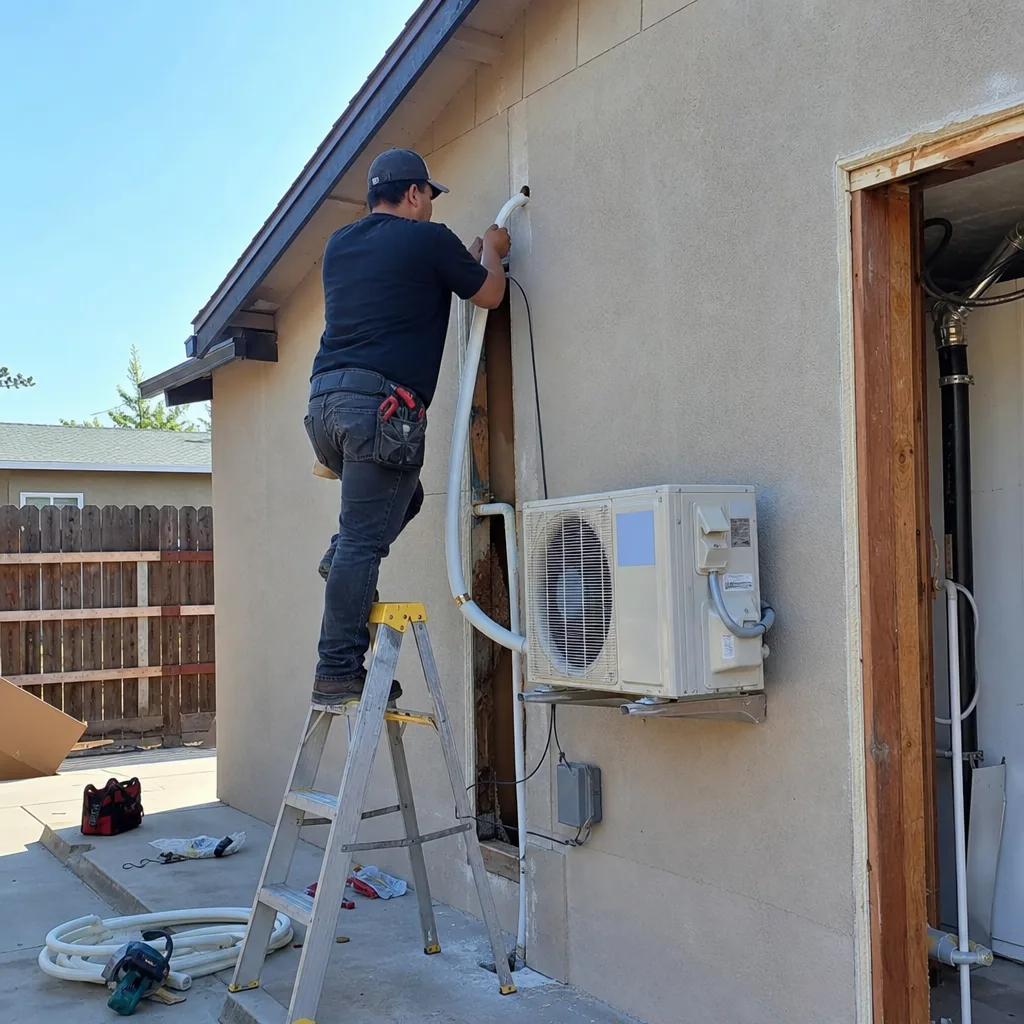
Garden Grove’s ADU market has unique characteristics that affect the DIY-versus-professional calculation.
Climate and soil: Garden Grove’s marine-influenced climate means moderate temperature swings but significant moisture exposure during winter construction. Our January-March rainfall averages 2.5-3.5 inches, enough to delay exposed foundation work and damage unprotected framing. The clay-heavy soils in the western neighborhoods near Westminster require specific foundation designs that owner-builders often underestimate - we’ve seen slab-on-grade failures from inadequate moisture barriers that a geotechnical report would have flagged.
Code environment: Garden Grove adopted the 2022 California Residential Code with local amendments effective January 2023. Key changes affecting ADUs: reduced setbacks for conversions (4 feet side and rear for garage conversions), but maintained 4-foot side and rear for detached new construction. Fire separation requirements between ADU and primary residence are strictly enforced in the plan check phase - we’ve had three projects in the past 18 months where owner-prepared drawings failed at this specific review point.
Market context: Garden Grove’s median home value has increased significantly since 2015, and ADU rental income supports mortgage qualification for many homeowners who bought at peak prices. A delayed or failed ADU project doesn’t just cost construction dollars - it costs rental income that may be factored into household cash flow. The 6-12 month schedule difference between professional and owner-builder completion translates to $18,000-$36,000 in lost rental income at current Garden Grove ADU market rates.
Neighborhood variation: The Brookhurst corridor, the Garden Grove Boulevard historic district, and the newer developments near the 22 freeway each have distinct utility capacity, setback constraints, and parking requirements. A Garage Conversion ADU in Garden Grove in the older central neighborhoods often requires electrical service upgrades that add $4,000-$8,000 to the project - a line item that owner-builders frequently omit from initial budgets because they don’t know to check the main panel amperage during feasibility.
Common Mistakes to Avoid
- Hiring unlicensed “handyman” trades to save 20%. The CSLB actively investigates residential projects in Orange County, and Garden Grove building inspectors are required to report unlicensed activity. Your project gets red-tagged, your permit is revoked, and your subcontractor disappears with the deposit.
- Assuming the owner-builder exemption covers your adult children or friends as “helpers.” Anyone you pay, including cash-under-table arrangements, becomes your statutory employee. Workers’ compensation law doesn’t recognize informal agreements.
- Skipping the structural engineering for “simple” projects. Garden Grove’s moderate seismic zone requires lateral analysis for all detached ADUs over 120 square feet. We’ve seen homeowners pour foundations, frame walls, and then learn their shear wall schedule doesn’t meet the engineer’s calculations - requiring partial demolition.
- Using online plan templates without local amendment review. Generic ADU plans from national vendors fail Garden Grove plan check because they don’t address local setback variations, utility connection requirements, or the specific green building checklist items the city enforces.
- Underestimating carrying costs during permit delays. Every month of owner-builder delay costs financing interest, property taxes, and lost rental income. At current rates, a 6-month delay on a $300,000 project adds $9,000-$15,000 in soft costs that erase self-perform savings.
- Failing to verify subcontractor insurance before payment. A C-10 electrician with lapsed workers’ compensation exposes you to direct liability. Request certificates of insurance, verify them with the carrier, and require your name as additional insured - then repeat at 30-day intervals.
- Neglecting the five-year resale disclosure in your long-term planning. If you intend to sell within five years of ADU completion, the owner-builder status becomes a material disclosure that affects buyer financing and sale price. Professional construction with documented permits and warranties is a marketable asset; self-build status is a discount item.
When to Call a Professional
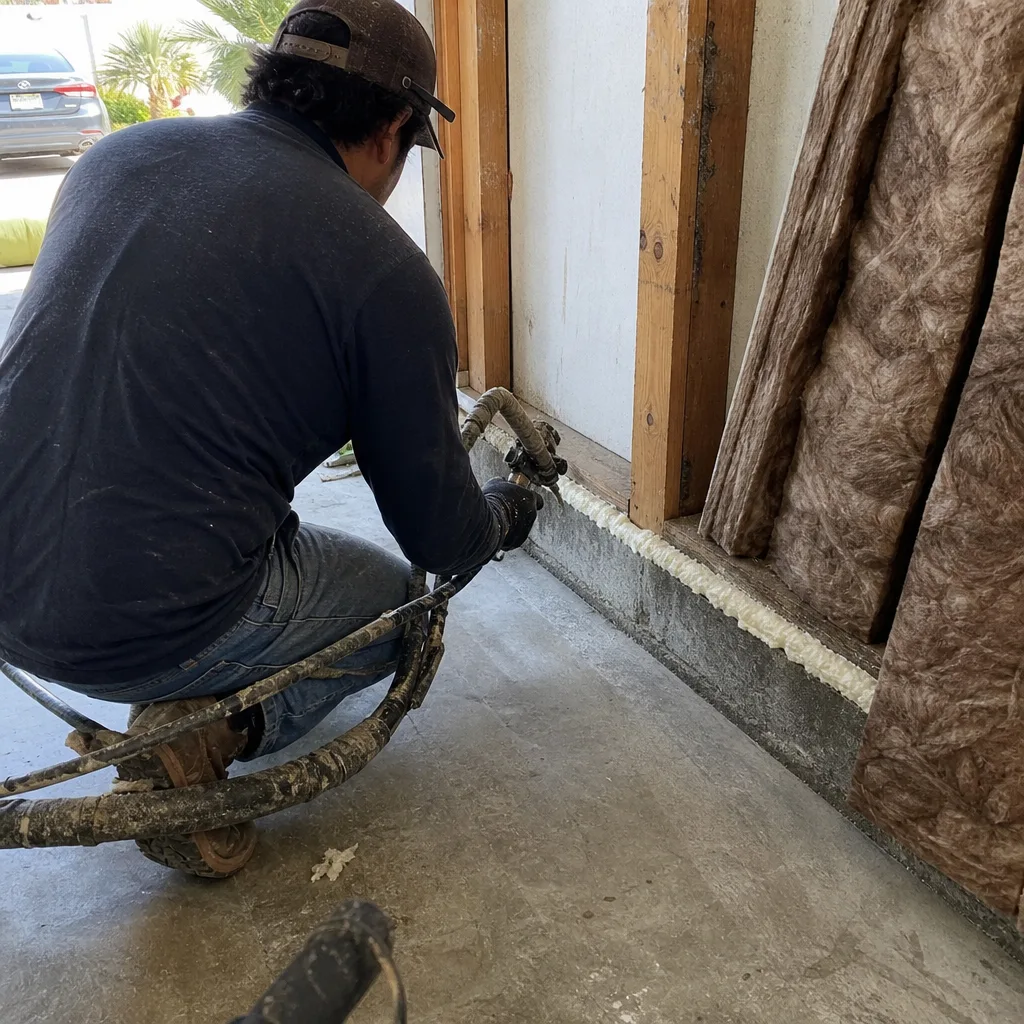
Call a design-build studio when your ADU is a financial asset, not a hobby. That threshold arrives when: the project exceeds $75,000 in construction value; you need rental income within 18 months to support household cash flow; your homeowner’s insurance carrier has confirmed they won’t cover owner-builder activities; or you’ve received a written estimate from another firm and want verification against a fixed-price alternative.
Ellery ADU Studio Garden Grove offers free estimates in Garden Grove - call (657) 567-6590. We also provide a Free Second Opinion on any written estimate already in hand, with specific line-item analysis of where the scope is clear, where it’s ambiguous, and where hidden costs typically emerge.
Frequently Asked Questions
Professional ADUs in Garden Grove typically range from $220,000 for a garage conversion to $380,000 for a new detached unit, all-inclusive with design, permitting, and construction. For detailed pricing analysis, see our ADU cost breakdown: the Garden Grove homeowner’s reference for 2026. Competent owner-builders who complete their projects spend $200,000-$340,000 but rarely save more than 3-7% after accounting for separate design costs, insurance, and carrying cost delays. Call (657) 567-6590 for a written price on your specific property - estimates are free, and the price is fixed before work starts under Haven Standard Clause 1.
You can act as your own general contractor under California’s owner-builder exemption, but you must hire C-licensed subcontractors for electrical, plumbing, HVAC, structural, roofing, and concrete work. You become personally liable for all workers on site, your homeowner’s insurance likely won’t cover construction-phase losses, and you must disclose the self-build status to any buyer within five years. Most Garden Grove homeowners find the legal and financial exposure exceeds the limited savings.
No. Standard California homeowner’s policies exclude damage arising from construction activities performed by or under the direction of the insured. You need a separate builder’s risk policy, which costs $1,200-$2,800 for a typical ADU and may be unavailable if you’re using the owner-builder exemption. Without it, fire, theft, or worker injury losses come from your personal assets.
Professional design-build studios typically achieve permit issuance in 3-5 months in Garden Grove, including plan check corrections. Owner-builders without plan-check experience average 6-12 months, with some projects stalling for 18+ months due to repeated correction cycles. The 2022 code adoption added Title 24 energy documentation requirements that inexperienced preparers often miss.
California law requires disclosure of owner-builder status to buyers within five years of completion. Most lenders treat this as a material defect requiring third-party inspection, and buyers commonly negotiate price reductions of $15,000-$30,000 or demand escrow holdbacks. Professional construction with documented permits, inspections, and warranty transfer avoids this entirely.
Prefab systems from brands like Plant Prefab, Tuff Shed, and James Hardie reduce on-site construction time but don’t eliminate the need for professional site prep, foundation work, utility connection, and finish coordination. The factory build happens in parallel, but the critical path items - permitting, foundation, MEP tie-in - still require the same licensed trades and municipal coordination. Ellery ADU Studio specifies and coordinates these systems under the same single contract as site-built projects.
You should receive: a complete permit set stamped by the city; a written contract with fixed pricing and detailed scope; certificates of insurance for all trades; inspection sign-off documentation; a certificate of occupancy; and a written warranty. Under The Haven Standard, Ellery ADU Studio also provides a documented photo record on every visit and the 365-Day Done Right Promise in writing before construction begins.
The Bottom Line
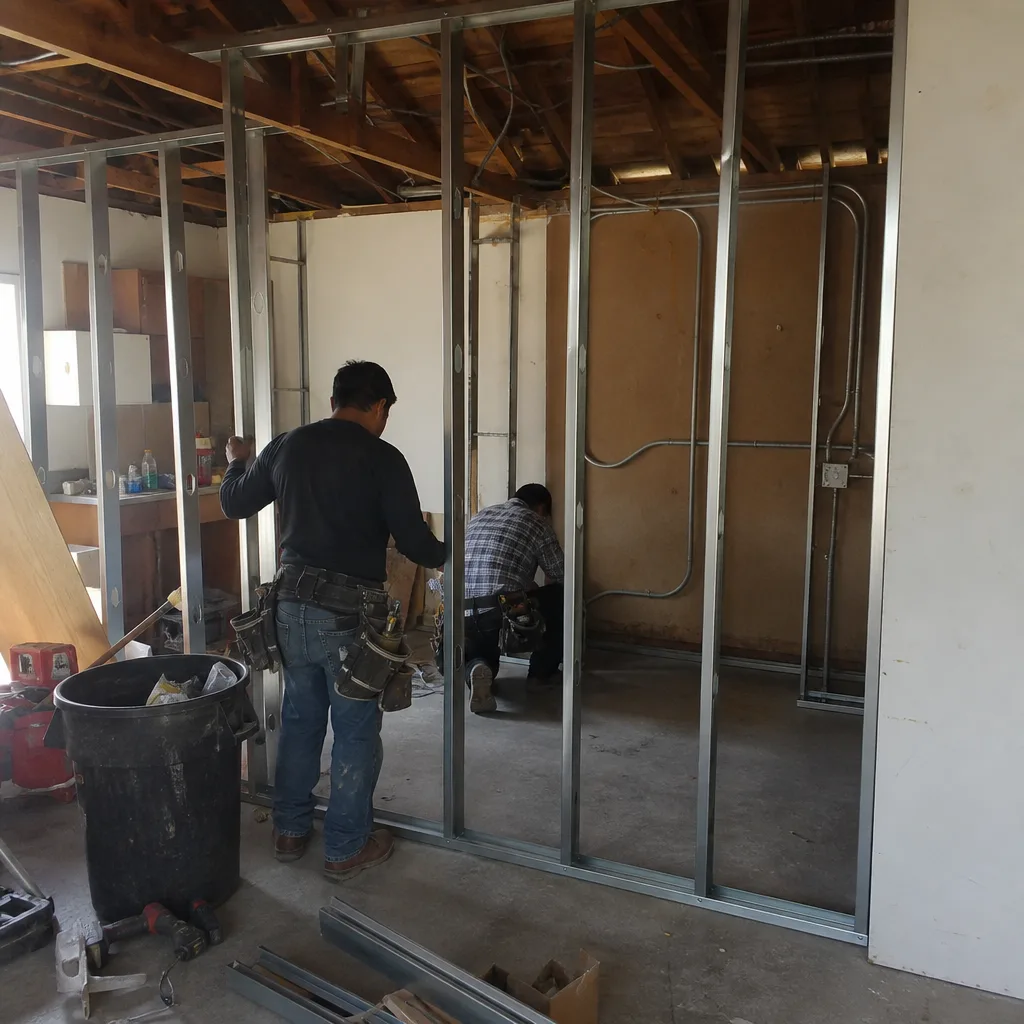
The DIY-versus-professional ADU decision in Garden Grove is not primarily about construction skill or material markup. It’s about legal liability, insurance continuity, permit competence, and long-term asset value. California’s owner-builder exemption offers narrow permission with broad exposure: personal liability for workers, voided insurance coverage, and a five-year resale disclosure that most buyers treat as damage. The genuine savings from self-performed finish work - typically $12,000-$25,000 - are consumed by separate design costs, insurance premiums, schedule delays, and unquantified risk. For homeowners who need their ADU to function as a rental asset, a family housing solution, or a property-value enhancement, the design-build model transfers these risks to a licensed, insured, warrantied party at a predictable price. The question isn’t whether you can build it yourself. It’s whether the 3-7% theoretical savings justifies assuming 100% of the liability for a six-figure construction project.
Written by Nadia Ellery, Owner at Ellery ADU Studio Garden Grove, serving Garden Grove since 2015.