
Last updated September 25, 2026
Seasonal ADU Care for Garden Grove: Year-Round Homeowner’s Guide
The most expensive ADU repair call we have seen in Garden Grove was not from a storm. It was from a flat membrane roof on a garage conversion ADU near Chapman Avenue that blistered during a September Santa Ana wind event, then sat uninspected until December rains turned a surface crack into a $14,000 substrate replacement. In a city with 285 sunny days, damage accumulates slowly and invisibly. This guide gives Garden Grove homeowners a month-by-month maintenance schedule calibrated to what actually degrades here: UV fatigue, thermal expansion cycles, and wind-driven debris that Northern California guides never mention.
Quick Answer
Garden Grove ADU maintenance follows a four-season rhythm driven by Orange County’s distinct climate pattern: Santa Ana wind preparation in fall (September-November), rain-readiness checks before December storms, HVAC coil cleaning during the March service window, and UV-protective exterior sealing before peak summer intensity. A homeowner who follows this schedule typically prevents the three costliest ADU failures we see in Garden Grove: membrane roof leaks, mini-split compressor damage, and stucco water intrusion through neglected weep screed.
Table of Contents
- Santa Ana Season: September-November Wind and Heat Prep
- Winter Rain Readiness: December-February Water Management
- Spring HVAC Service Window: March Maintenance
- Summer UV and Paint Cycle: May-August Protection
- Permit-Condition Maintenance Items Homeowners Forget
- Prefab and Modular ADU-Specific Care
- The Garden Grove Month-by-Month Checklist
 Before
 After
AfterSanta Ana Season: September-November Wind and Heat Prep
The Santa Ana winds that sweep through Orange County from September into November are not merely uncomfortable. They are a distinct mechanical stress on ADU structures that differs fundamentally from coastal fog or inland valley heat. In Garden Grove, we regularly see three failure modes that originate in this window and manifest months later.
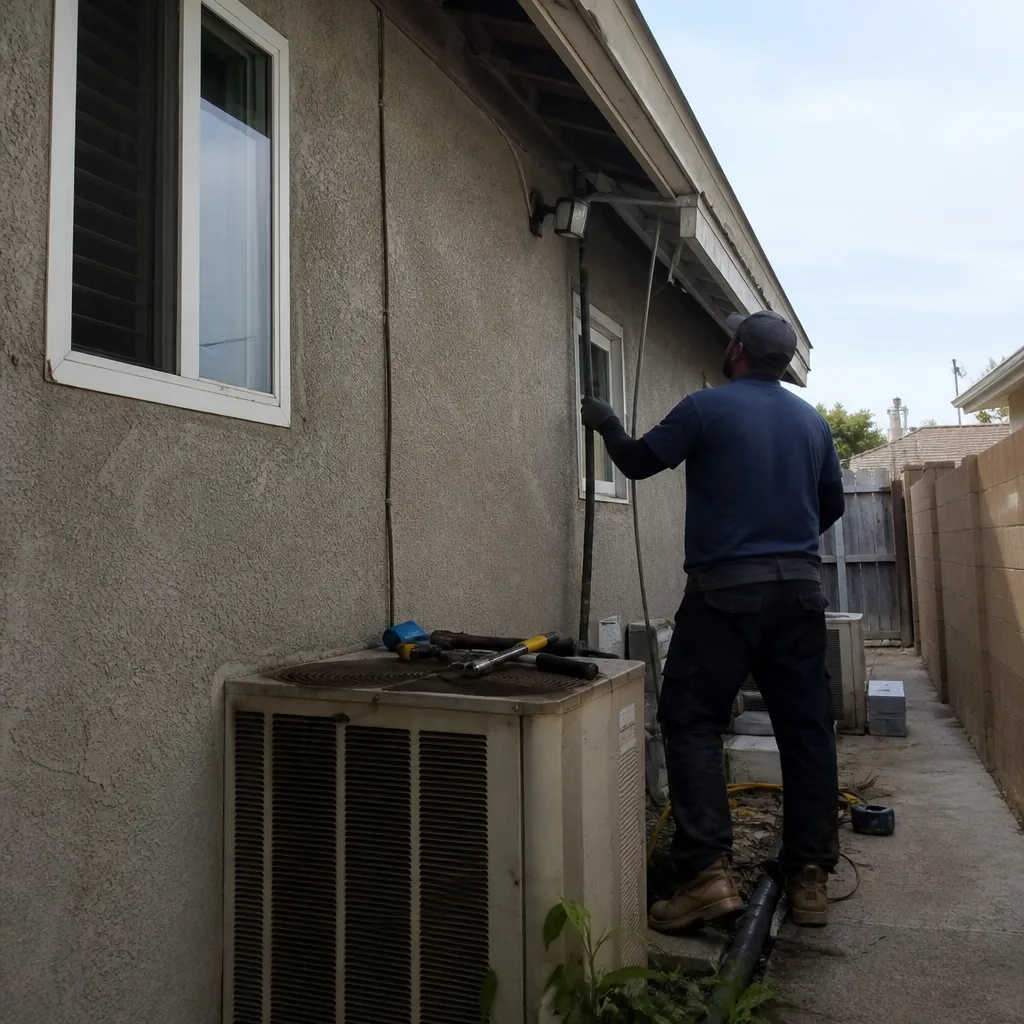
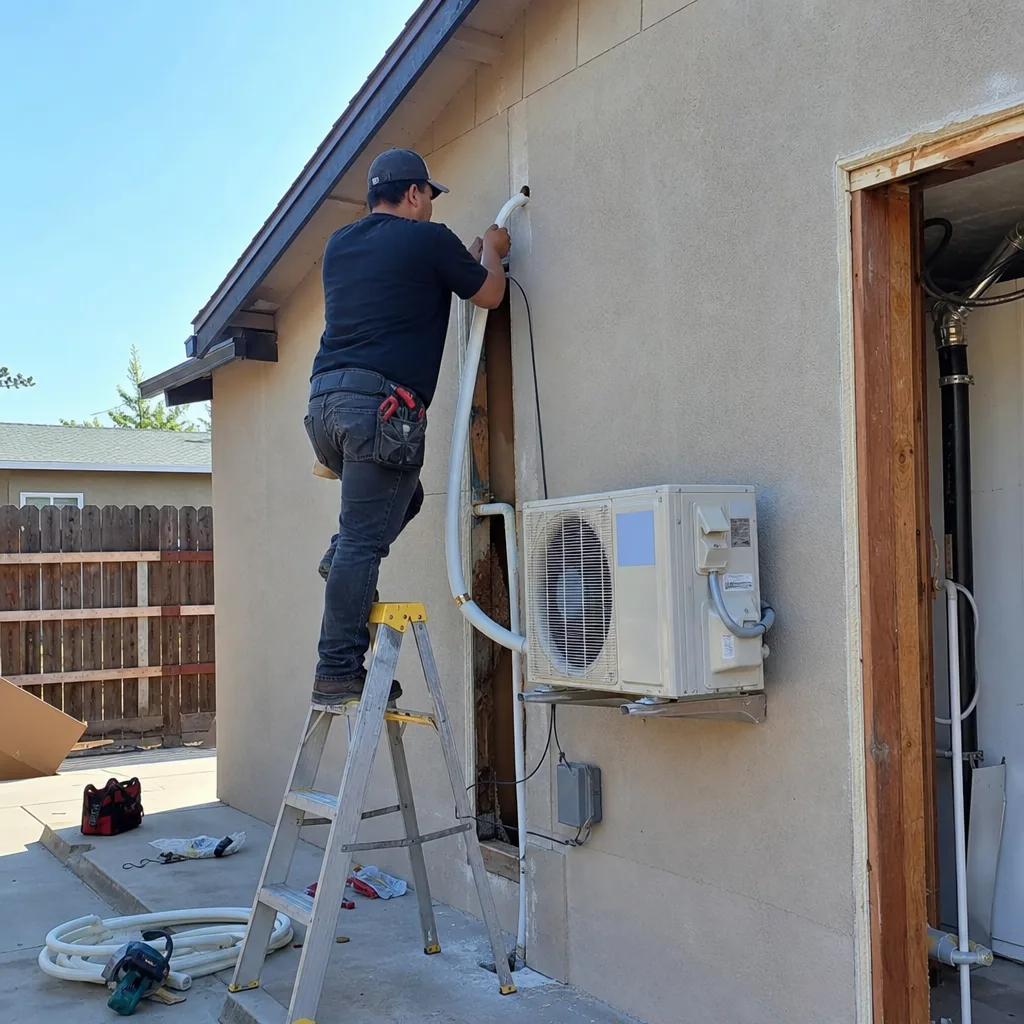
Mini-split outdoor units. The condenser unit for a ductless mini-split sits exposed to wind-borne grit, palm frond fragments, and construction debris common in developing Garden Grove neighborhoods. We inspect units where the coil fins have been sandblasted clean of their aluminum coating, accelerating corrosion that shows up as refrigerant leaks in year four or five. Before Santa Ana season, the unit should be powered down, the coil rinsed with low-pressure water, and the mounting pad checked for level. A unit that vibrates on an uneven pad will stress refrigerant lines at the flare fitting. The documentation we provide on every ADU Design & Permitting in Garden Grove project includes the specific mini-split model and coil access orientation, so a technician knows what they are working with before they arrive.
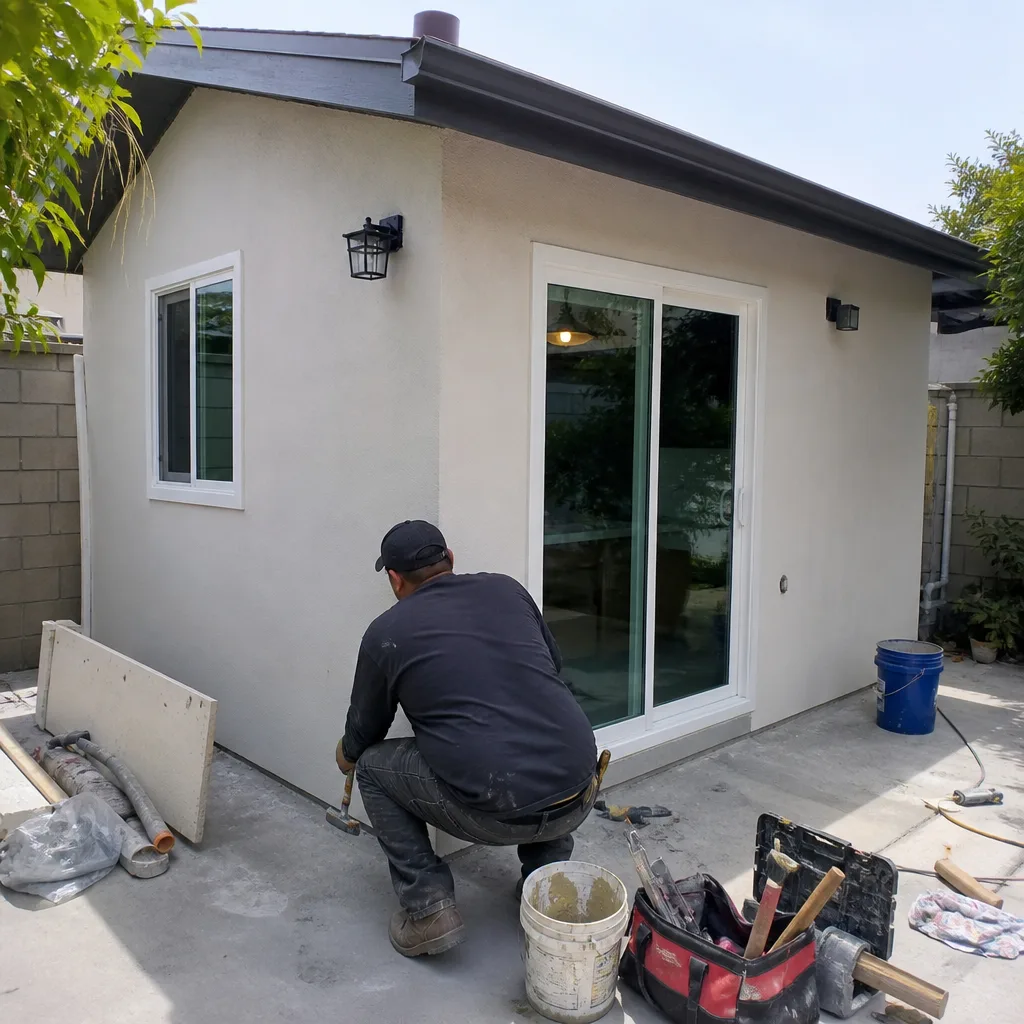
Stucco hairline cracks. Garden Grove’s clay-heavy soils shift with seasonal moisture changes, and the thermal cycling between 95-degree Santa Ana days and 55-degree nights opens hairline cracks in stucco that were invisible in June. These are not structural emergencies. They are, however, water entry points once December arrives. The correct response is not panic caulking. It is a close visual inspection in October, photo documentation of crack patterns, and elastomeric patching only where cracks exceed 1/16 inch or show directional clustering that suggests substrate movement. We have seen homeowners seal every surface crack with silicone, trapping moisture and creating the exact problem they feared.
Roof membrane seams. Flat or low-slope roofs on garage conversion ADUs are the most vulnerable. The Santa Anas do not just blow debris; they superheat membrane surfaces to temperatures that accelerate adhesive degradation at seams and penetrations. A proper October inspection walks every seam, checks pipe boot elasticity, and verifies that gravel stops and edge metal remain mechanically fastened. The $14,000 substrate replacement we referenced earlier began with a lifted edge that flapped for six weeks before the first rain.
Key checks for Santa Ana season:
- Mini-split condenser: level pad, clean coil, intact electrical whip
- Stucco: photo-documented crack map, elastomeric patch where cracks exceed 1/16 inch
- Roof membrane: seam walk, pipe boot pliability test, edge metal fastener check
- Window and door weatherstrip: compression set check after summer heat aging
Winter Rain Readiness: December-February Water Management
Garden Grove receives approximately 13 inches of annual rainfall, concentrated in brief but intense events between December and February. The damage pattern is not gradual rot. It is sudden water intrusion through three specific points that we have documented on dozens of post-rain inspection calls.
Downspout clearance. ADUs, particularly Garage Conversion ADU in Garden Grove projects, often have abbreviated gutter runs that drain into the main house downspout system or into surface drains that were adequate for the original garage roof but overwhelmed by the larger ADU footprint. A single clogged downspout during a December storm can back water into the fascia, run behind the stucco, and saturate insulation before the homeowner notices a stain. The pre-rain check is simple: run a hose into each gutter and verify flow at the outlet. If water pools or overflows, the blockage is upstream. We have found tennis balls, rat nests, and construction debris from the original build still lodged in downspouts three years later.
Weep screed inspection. The weep screed is the metal strip at the base of stucco walls that provides both a drainage path for moisture that penetrates the stucco and a termination point that keeps the stucco above grade. In Garden Grove’s older neighborhoods, particularly near Garden Grove Boulevard and the original tract developments, grade settlement or landscaping additions often bury the weep screed. When this happens, water that reaches the stucco base has no exit path. It wicks into the sill plate and rim joist. The inspection is visual: the bottom of the weep screed should be visible, and the gap below it should be clear of soil, mulch, or hardscape. A buried weep screed is not a maintenance item. It is a repair that requires stucco removal and re-flashing. Catching it early prevents the repair.
Window flashing. ADU windows, especially in prefab units where the window-to-wall interface was factory-sealed, rely on pan flashing and head flashing that can separate from the wall membrane during thermal cycling. The critical inspection point is the head: water running down the wall above the window should be directed outward, not into the rough opening. A simple hose test, directed at the wall above each window for two minutes while an observer watches the interior sill, reveals failure without waiting for a storm. We document this test with photos on every warranty inspection call.
Three water management checks before December:
- Gutter and downspout flow test with hose; verify discharge point is clear and slopes away from foundation
- Weep screed visibility check; measure and photo-document any grade encroachment
- Window hose test; inspect interior sills and jambs for moisture within 30 minutes of spraying
Spring HVAC Service Window: March Maintenance
March in Garden Grove occupies a narrow mechanical window: the heating season has ended, the cooling season has not begun, and HVAC technicians have scheduling availability that disappears by May. This timing matters for ADU mini-split systems because the service performed in March extends equipment life by an estimated 3-5 years based on manufacturer technical bulletins and our field observation of 900+ units.
The specific service is coil cleaning, not the surface rinse that homeowners can perform, but the deep cleaning of the indoor evaporator coil that requires panel removal and fin straightening. Garden Grove’s pollen load, particularly from the jacaranda and olive trees common in established neighborhoods, coats evaporator coils with a sticky film that traps dust and reduces heat transfer efficiency. A coil running at reduced efficiency works longer cycles, stresses the compressor, and eventually trips high-pressure safeties. By March, the accumulation is visible but not yet baked into a hard layer that requires chemical remediation.
What a licensed HVAC technician should document in writing:
- Before and after photos of the evaporator coil
- Refrigerant pressures and superheat/subcooling values
- Condensate drain flow rate and any biological growth noted
- Outdoor unit amp draw and capacitor test results
- Filter condition and replacement size for homeowner reference
We specify this documentation in our project handover packets because it establishes a baseline. When a homeowner calls in year five with a compressor issue, the March service record from year one tells us whether the unit was properly maintained or whether the failure is a warranty matter. Under our Ellery ADU Studio Garden Grove home 365-Day Done Right Promise, we need this documentation to determine responsibility. Homeowners who skip March service and call in July with a failed compressor face diagnostic fees and potential coverage disputes that a written record would have prevented.
The other March task is condensate line verification. Garden Grove’s hard water leaves mineral deposits in condensate lines that can clog by year three. A wet/dry vacuum pulled from the exterior outlet, followed by a gallon of clean water poured into the interior pan, confirms flow. A technician should note any restriction and the cleaning method used.
Summer UV and Paint Cycle: May-August Protection
Orange County’s UV index peaks in June and July at levels that degrade exterior coatings measurably faster than in coastal Los Angeles or inland Riverside. For Garden Grove ADUs, particularly stucco-clad structures and the factory-finished panels on prefab units from brands like Mighty Buildings or Boxabl, the summer sun is the primary driver of the exterior maintenance cycle.
Stucco ADUs: elastomeric versus acrylic. Elastomeric coatings, with their higher solids content and flexible film, bridge hairline cracks and provide a continuous moisture barrier. They are appropriate for Garden Grove ADUs where stucco cracking has been observed or where the original finish is a conventional cement-based stucco without a factory color coat. Acrylic latex paints breathe better and are appropriate for newer stucco in good condition where moisture management is less critical. The wrong choice is applying acrylic over a cracked surface, which simply telegraphs the cracks through in one season, or applying elastomeric over a sound surface, which traps moisture if applied too thickly. We specify the coating type in our project documentation based on substrate condition, not brand preference.
Prefab panel finishes. Factory-applied finishes on Dvele or Plant Prefab units are typically fluoropolymer or PVDF coatings with 20-year rated lifespans, but this rating assumes no physical damage and periodic cleaning. The summer maintenance is not recoating. It is inspection of the panel seams and sealant beads that accommodate thermal movement. UV degrades polyurethane sealants to a chalky surface that loses adhesion; silicone sealants degrade more slowly but can attract dust that abrades the panel finish. A May inspection identifies sealant failure before monsoon moisture arrives.
Wood trim and fascia. Even on stucco ADUs, wood trim at windows, doors, and rake boards requires attention. Garden Grove’s dry summers pull moisture from wood, opening joints that were tight in March. A quality acrylic-latex caulk, applied when wood is at its driest (July-August), will accommodate the swelling that occurs when humidity returns in fall. Caulking in winter, when wood is swollen, guarantees failure by spring.
The summer schedule:
- May: exterior coating condition assessment; identify areas of chalking, fading, or cracking
- June: sealant inspection at panel seams, window perimeters, and penetrations; note any adhesion loss
- July-August: wood trim caulking during dry-wood window; touch-up painting of any bare substrate
Permit-Condition Maintenance Items Homeowners Forget
The Certificate of Occupancy for a Garden Grove ADU includes conditions that persist beyond the final inspection. Three in particular generate code violations and safety failures that we encounter on resale inspections and insurance reviews. Understanding ADU Permits, Codes & Inspections in CA: What You Need to Know helps homeowners avoid these persistent issues.
Smoke and CO detector battery replacement. The California Residential Code requires interconnected smoke alarms and CO detectors in all ADUs, with battery backup where hardwired. The CO detector, specifically, has a sensor lifespan of 5-7 years, not a battery lifespan. A homeowner who replaces the 9-volt battery annually but never replaces the unit itself has a silent failure. We document the manufacture date of every detector on our final inspection photo record, and we recommend calendar replacement at year six regardless of test-button function. The test button verifies electronics, not sensor sensitivity.
Egress window hardware inspection. Bedroom egress windows in ADUs must open without tools, without special knowledge, and with a clear opening of 5.7 square feet. The hardware that achieves this, particularly on awning and hopper windows common in prefab units, uses friction stays or scissor hinges that lose tension over time. A window that requires two hands to open, or that drifts closed when released, fails the egress requirement even if the net opening is technically adequate. Annual lubrication and tension adjustment, documented with a dated photo, preserves both function and code compliance.
Electrical panel labeling. The final inspection requires every circuit to be legibly labeled. Circuit directories fade, handwritten labels smear, and subsequent electrical work by other trades often leaves the directory inaccurate. A simple annual verification, ideally during daylight saving time changes when smoke detector batteries are checked, prevents the dangerous situation of a homeowner or emergency responder guessing which breaker controls which circuit.
Prefab and Modular ADU-Specific Care
Prefabricated ADUs from brands like Mighty Buildings, Boxabl, or Plant Prefab arrive with factory warranties that differ materially from site-built construction warranties. Understanding the maintenance obligations that preserve these warranties is part of the ownership calculus that many Garden Grove buyers overlook.
Foundation and leveling. Prefab units, particularly steel-framed systems, tolerate less differential settlement than wood-framed site-built structures. The factory warranty typically requires annual verification of level, measured at specified points, with documentation. We have seen warranty claims denied because the homeowner could not produce three years of level readings. The check is simple: a laser level or water level at the factory-specified reference points, photo-documented with date.
Utility connection flex lines. The connection between a prefab unit and site utilities often uses flexible connectors for water, gas, and electrical service. These accommodate the minor settlement and thermal movement that rigid connections cannot tolerate. They also have finite fatigue lives. Annual inspection for corrosion, kinking, or abrasion at contact points is typically warranty-required, and replacement intervals are specified in the installation manual that many homeowners file and forget.
Transportation stress points. Prefab units are engineered for transportation loads that differ from in-service loads. Connection plates, bolted splices, and panel-to-panel joints that experienced highway vibration may develop looseness not visible at final inspection. A structural inspection at year two, performed by a licensed contractor or engineer, identifies any relaxation before it becomes movement or noise. We coordinate this inspection as part of our New Detached ADU in Garden Grove handover for prefab projects.
The Haven Standard, Clause 3 (Documented Condition), requires that we provide the specific factory warranty documents and maintenance schedule for any prefab system we specify. Homeowners who purchase prefab units through other channels should request these documents explicitly; without them, warranty enforcement is difficult.
The Garden Grove Month-by-Month Checklist
This schedule consolidates the preceding sections into actionable items. Print it, date the completion, and retain photos.
September
- Schedule mini-split condenser cleaning and pad-level check
- Walk roof membrane seams; photo-document any lifting or blistering
- Map stucco cracks; mark for monitoring versus immediate repair
October
- Apply elastomeric patches to cracks exceeding 1/16 inch
- Verify window and door weatherstrip compression
- Clear roof drains and gutters of pre-rain debris
November
- Final Santa Ana damage inspection after last wind event
- Test downspout flow with hose at each outlet
- Verify weep screed visibility at all walls
December
- Window hose test: spray, observe interior for 30 minutes
- Inspect attic or roof cavity for daylight penetration at penetrations
- Replace smoke and CO detector batteries; note manufacture dates
January
- Post-storm inspection: interior stains, musty odors, door/frame binding
- Verify condensate line flow from heating operation
February
- Schedule any deferred repairs before spring demand
- Document winter observations for March HVAC service reference
March
- Schedule licensed HVAC deep coil cleaning with written documentation
- Perform condensate line vacuum and flow test
- Inspect egress window hardware function and lubricate
April
- Verify electrical panel labeling accuracy
- Inspect exterior for winter damage: staining, efflorescence, joint separation
May
- Assess exterior coating condition; plan summer touch-up scope
- Inspect prefab panel seams and sealant adhesion
June
- Apply UV-protective coating touch-ups to south and west exposures
- Verify mini-split filter condition and replacement size
July-August
- Caulk wood trim during dry-wood window
- Document prefab level readings if warranty-required
- Inspect utility flex lines for abrasion or corrosion
Common Mistakes to Avoid
- Sealing every stucco crack with silicone. Silicone is impermeable and traps moisture behind the stucco. Use elastomeric patching compound that bridges cracks while breathing vapor.
- Skipping the March HVAC window. By May, Garden Grove technicians are booked two weeks out, and the pollen layer has baked onto coils. The compressor pays the price.
- Burying the weep screed with landscape mulch. This is the single most common moisture failure we see in older Garden Grove neighborhoods. The screed must remain visible.
- Assuming factory prefab warranties cover everything. Mighty Buildings, Boxabl, and Plant Prefab warranties require documented maintenance. Missing one annual level check can void structural coverage.
- Replacing CO detector batteries but not the unit. The sensor fails before the electronics. A chirping detector is not the only failure mode; silent sensor degradation is more dangerous.
- Caulking wood trim in winter. Wood swells with humidity. Caulk applied to swollen wood fails when dry summer shrinkage opens the joint. July and August are the correct months.
- Ignoring the Certificate of Occupancy conditions. Garden Grove’s building department issues specific maintenance-related conditions that persist as code requirements. Resale inspections catch violations that cost thousands to remediate.
When to Call a Professional
Some maintenance tasks require licensing, specialized equipment, or warranty preservation that DIY work cannot achieve. Call a licensed California contractor when roof membrane damage exceeds surface patching, when stucco cracks show directional patterns suggesting foundation movement, when electrical panel labeling requires circuit tracing, or when prefab structural inspections are warranty-required. For HVAC service, California law requires EPA Section 608 certification for refrigerant handling; the deep coil cleaning that extends equipment life is not a homeowner task.
Ellery ADU Studio Garden Grove offers free estimates in Garden Grove for maintenance-related repairs, warranty inspections, and condition assessments on ADUs we built and those we did not. Our documented photo record process means you receive evidence of what was found, not a verbal summary. Call (657) 567-6590 to schedule.
Frequently Asked Questions
Membrane roof repair on a Garden Grove ADU typically runs $800-$2,400 for localized patching of seams and penetrations, while substrate replacement after water damage ranges $8,000-$16,000 depending on insulation involvement. See our ADU Cost Breakdown: The Garden Grove Homeowner’s Reference for 2026 for detailed pricing on these and other repairs. Flat roofs on garage conversions are the most vulnerable to the Santa Ana-rain sequence described in this guide. Call (657) 567-6590 for an exact quote on your specific roof condition - estimates are free.
No. Under Haven Standard Clause 1, every project is quoted with a written price before any work begins. The scope is locked at signing. If we discover concealed damage during maintenance work, we document it with photos, explain the finding, and provide a separate written amendment for your approval before proceeding. No door-side upsells.
A licensed HVAC technician should perform deep coil cleaning and system documentation annually, ideally during the March service window before cooling demand peaks. Homeowner tasks - filter replacement, condenser rinsing, pad-level checks - should occur quarterly. The combined schedule typically extends equipment life to 15-20 years versus 10-12 years for neglected units.
Routine maintenance - cleaning, caulking, filter replacement - does not require permits in Garden Grove. Repairs that involve structural modification, electrical circuit changes, or roof membrane replacement exceeding 25% of the surface do require permits. We pull all required permits and schedule inspections as part of any repair scope that triggers these thresholds.
Three factors: the Santa Ana wind exposure is more severe than coastal cities, the older housing stock near Garden Grove Boulevard has more settlement-prone foundations than newer master-planned communities, and the city’s inland position creates wider temperature swings than beach-adjacent areas. Maintenance schedules written for Newport Beach or Laguna do not account for these mechanical stresses.
Locate the original warranty documents, which specify maintenance requirements and documentation standards. If you cannot find these documents, contact the manufacturer directly with your unit serial number. For ADUs built by Ellery ADU Studio, we provide these documents at handover and maintain copies in our project files. A Free Second Opinion on warranty status is available - call (657) 567-6590.
The Bottom Line
Garden Grove’s climate rewards proactive maintenance and punishes deferred inspection. The $14,000 roof substrate replacement that opens this guide began with a crack that a October walk would have caught. The mini-split compressor that fails in July was preventable with a March cleaning. The moisture damage behind buried weep screed is visible to anyone who looks. This schedule is not elaborate. It is specific to the mechanical stresses that actually occur here, documented in writing, and calibrated to the service windows when qualified technicians are available. The homeowners who follow it spend less on repairs, preserve their warranty coverage, and avoid the emergency calls that define ADU ownership for everyone else.
Written by Nadia Ellery, Owner at Ellery ADU Studio Garden Grove, serving Garden Grove since 2015.