
Last updated September 25, 2026
How to Hire a ADU Contractor in Garden Grove: A Step-by-Step Guide
Of the three most common ADU hiring mistakes in Garden Grove, the costliest isn’t picking the cheapest bid - it’s signing a construction contract before the permit set is complete, which leaves the scope legally undefined and change orders structurally inevitable. The standard advice to “get three bids” collapses for ADUs because each bidder is measuring a different project: one assumes your garage slab is 4 inches, another 6; one includes fire sprinklers, another doesn’t; one prices a full survey, another guesses from Google Earth. This guide replaces the bid-comparison model with a contract-structure test that surfaces the real risk before you sign anything, and you can explore more guides & resources for deeper context. You’ll learn how to verify licenses, read the warning signs specific to the Garden Grove market, and structure your hiring decision around documentation, not charm.
Quick Answer
To hire an ADU contractor in Garden Grove, verify their CSLB license class and bond status, confirm they complete permit sets before construction pricing, and insist on a single written contract covering both design and build. The safest firms will show you a physical office address, pull their own permits in Orange County, and quote a fixed price only after reviewing your survey and soil conditions - never from a driveway conversation.
Table of Contents
- The Contract-Structure Test: Five Questions Before Price
- How to Verify a Garden Grove ADU Contractor on CSLB
- Why Design-Build Beats the Bid Model for ADUs
- Red Flags in the Garden Grove ADU Market
- Does the Firm Pull Its Own Permits in Garden Grove?
- Reading an ADU Quote: Line Items That Matter
- The Interview Questions That Reveal Experience
- Common Mistakes to Avoid
- When to Call a Professional
- Frequently Asked Questions
- The Bottom Line
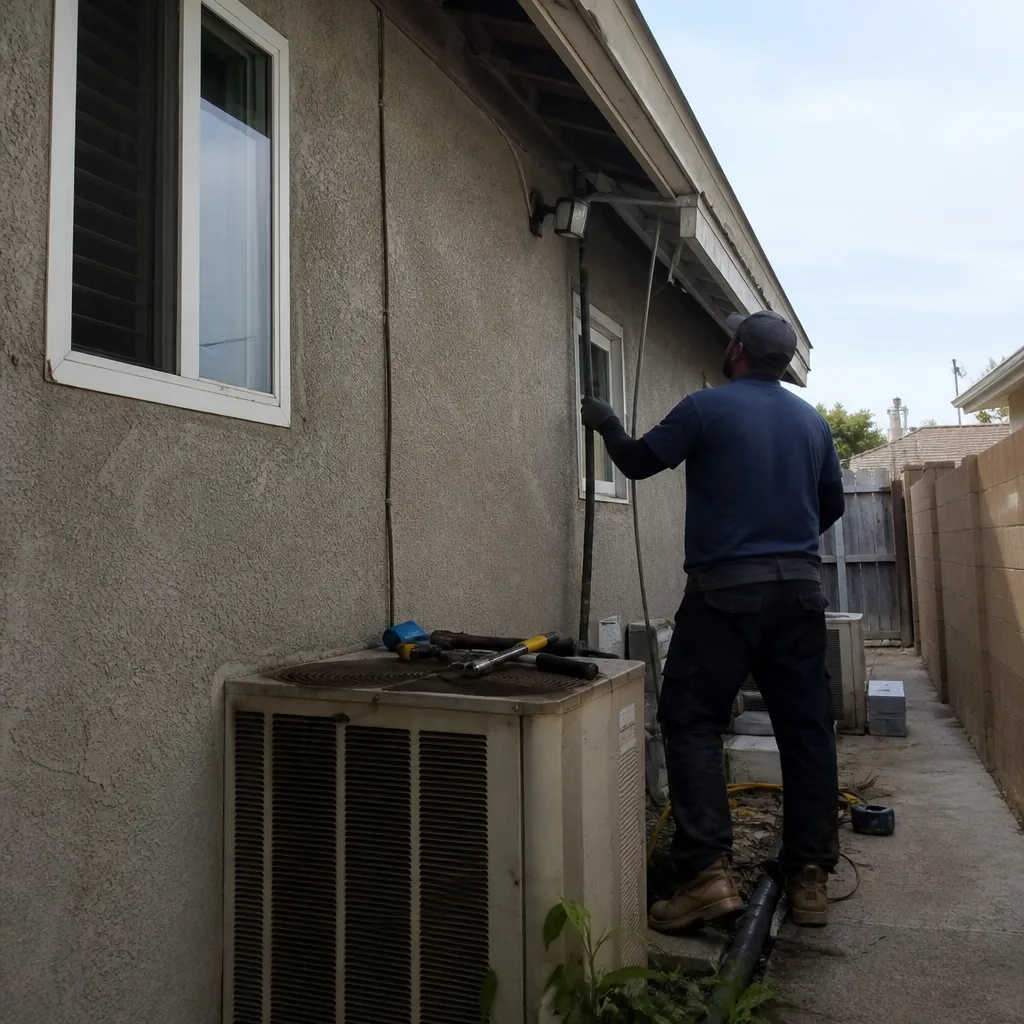 Before
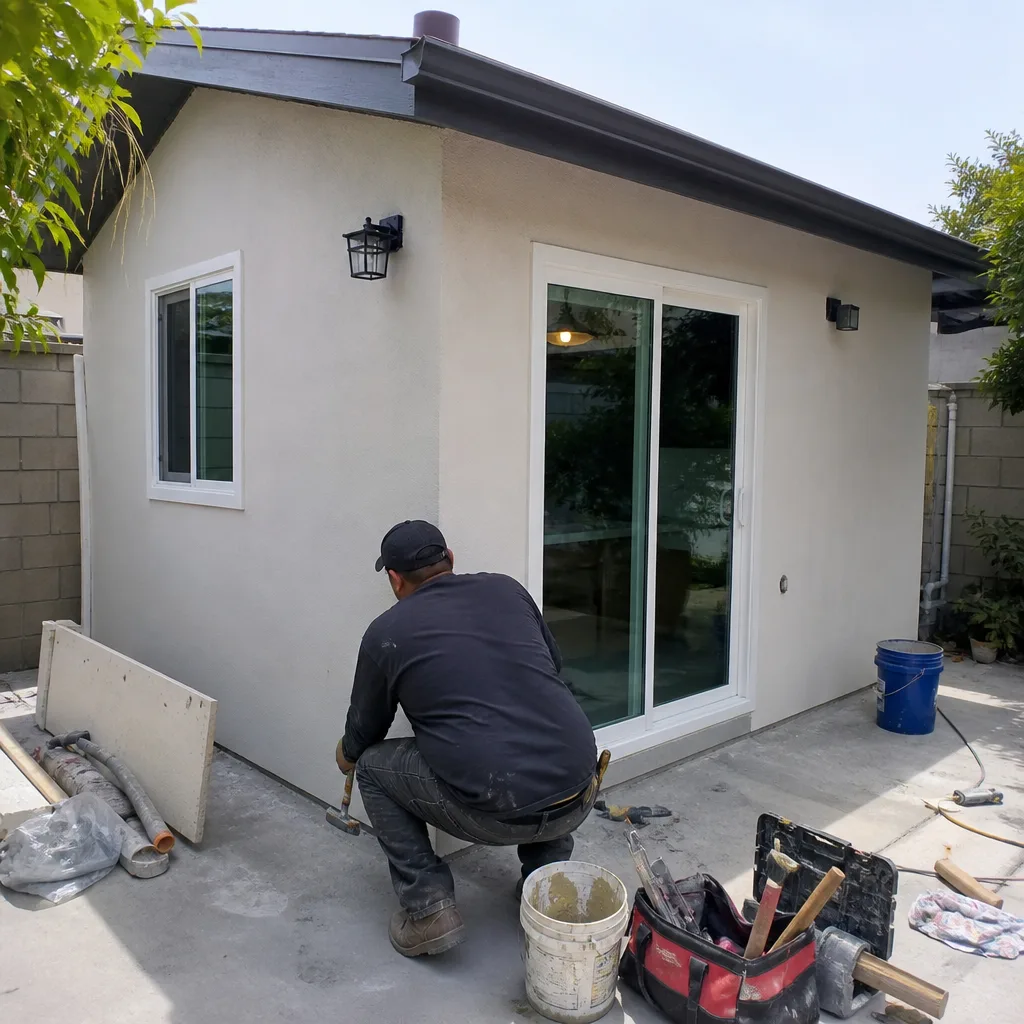 After
AfterThe Contract-Structure Test: Five Questions Before Price
Most homeowners start with price. We start with contract structure because the contract determines whether price means anything at all.
Here are the five questions we recommend asking any ADU firm in Garden Grove before you discuss dollars. Write the answers down. Compare them across firms. The gaps are where your project will stall.
- Is design and construction one contract or two? If they’re separate, you now have two parties who can blame each other when the built ADU doesn’t match the permitted drawings. We’ve reviewed projects in Garden Grove where the designer specified a 9-foot ceiling, the builder framed to 8 feet, and the owner paid twice to fix it because each contract pointed at the other. A single contract means one entity is responsible for the outcome.
- When is the price written and locked? Under Ellery ADU Studio Garden Grove home Haven Standard Clause 1, the written price is fixed before any work begins. If a firm gives you a “range” or “estimate” and promises to finalize later, you’re not looking at a contract. You’re looking at a starting point.
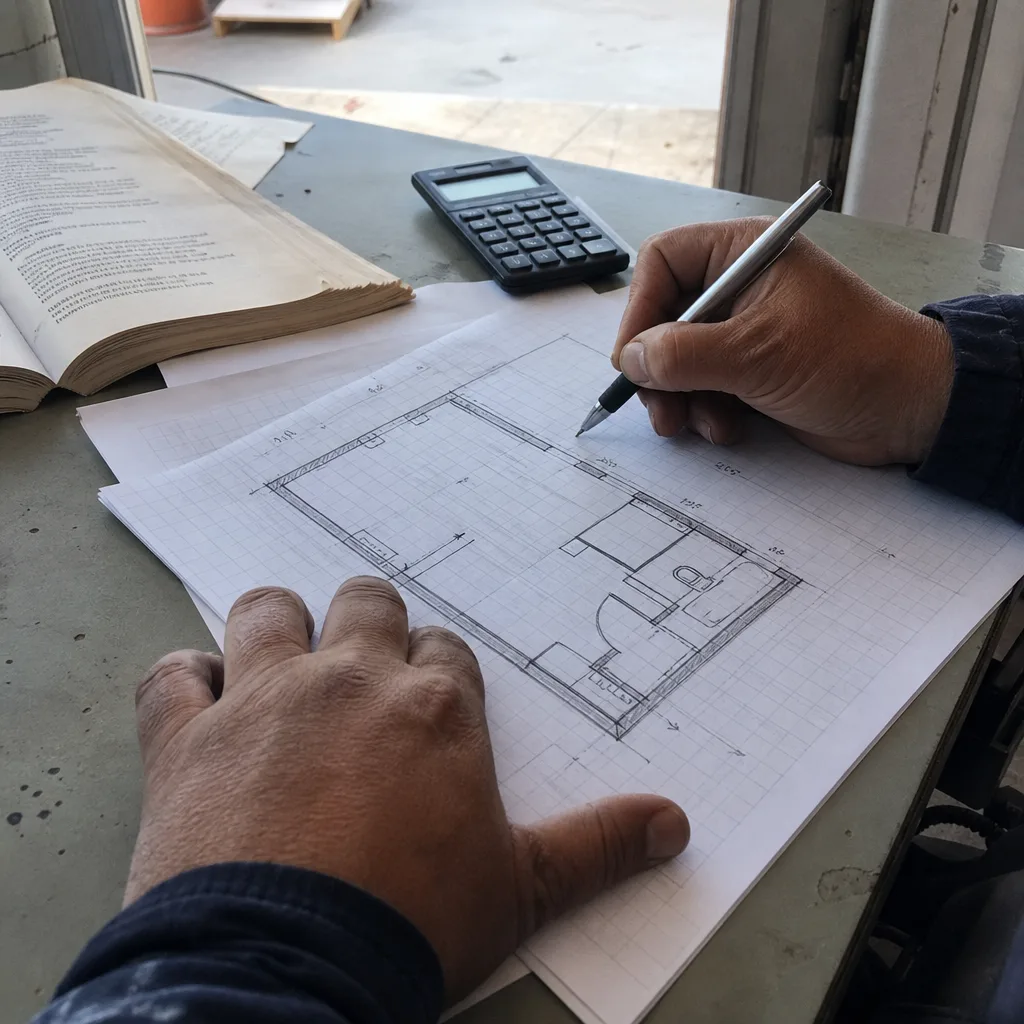
- What documentation do I receive at each phase? You should get a permit set (structural, electrical, plumbing, Title 24 energy calculations), a photo record of existing conditions, and a written scope of work. If the firm can’t name these documents, they don’t have a process.
- Who owns the permit set if the project stalls? Some Garden Grove firms retain copyright on the drawings and charge release fees. Others hand you incomplete plans that no other contractor can build from. Clarify this before you pay the design deposit.
- What happens if the built ADU doesn’t match the permitted drawings? The Haven Standard includes a 365-Day Done Right Promise for exactly this scenario. Most contracts are silent on it, which means the burden of proof and repair cost falls to you.
We’ve used this test since 2015 across 900-plus ADU projects. Firms that pass all five tend to finish on scope. Firms that fail two or more tend to generate change orders that add 15 to 40 percent to the final cost.
How to Verify a Garden Grove ADU Contractor on CSLB
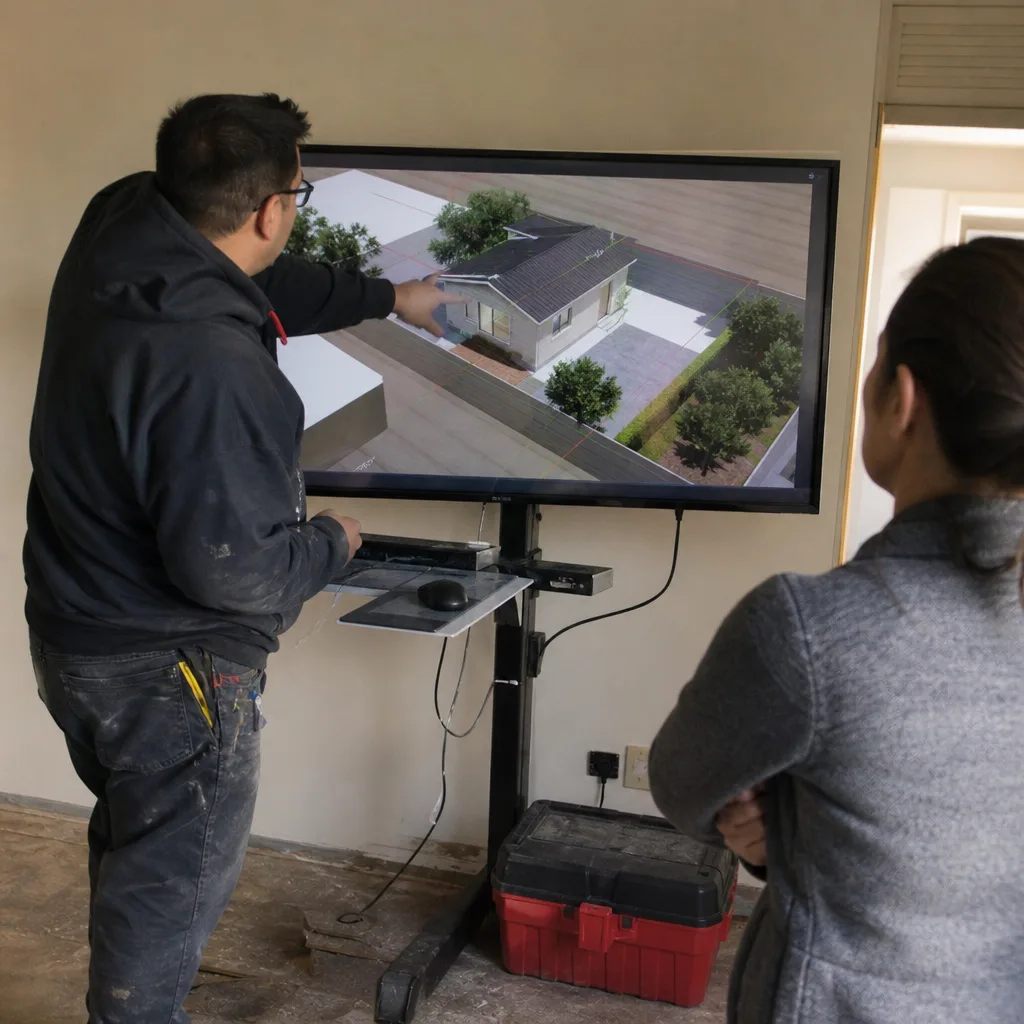
California’s Contractors State License Board maintains a public database at cslb.ca.gov. Every legitimate ADU contractor in Garden Grove should be verifiable there. Here’s how to read what you find.
License Class: B-General vs. Specialty
For a full ADU - new detached, garage conversion, or JADU - you want a B-General Building Contractor. This class authorizes structural work, foundation, framing, and the coordination of electrical, plumbing, and HVAC subcontractors. A C-36 Plumbing or C-10 Electrical contractor can only perform their trade; they cannot legally serve as the prime contractor for the full ADU. We’ve seen Garden Grove homeowners discover this mid-project when the city inspector asked for the B-license holder and none existed.
Bond Amount and Workers’ Comp
As of 2026, California requires a $25,000 contractor bond. On the CSLB page, click “Bond” to confirm active status. Then click “Workers’ Compensation” - if the firm has employees (not just 1099 subs), this certificate is mandatory. A contractor without workers’ comp who uses day laborers exposes you to liability if someone is injured on your property.
Disciplinary History
The CSLB page lists “Citations” and “Judgments.” Read them. A single citation for unlicensed subcontracting is more informative than ten years of clean record-keeping, because it reveals how the firm actually operates.
Business Address
Match the CSLB address to the firm’s website and Google Business Profile. A P.O. box or residential address isn’t automatically disqualifying, but it correlates with firms that subcontract everything and maintain no physical presence in Garden Grove. If you can’t visit their office, you can’t verify their operation.
Step-by-Step CSLB Check
- Go to cslb.ca.gov and click “Instant License Check”
- Enter the six- or seven-digit license number
- Confirm “Status: Active” and expiration date beyond your project timeline
- Verify license class is B-General Building for full ADU projects
- Click “Bond” and “Workers’ Compensation” tabs - both should show current certificates
- Scroll to “Disciplinary Actions” - note any suspensions or citations in the past five years
- Compare the listed business address to the firm’s quoted location
We’ve had prospective clients in the West Grove and Garden Park neighborhoods run this check and discover a “local” firm was actually operating from a mail-forwarding service in Nevada. The CSLB search takes four minutes. The litigation it prevents takes years.
Why Design-Build Beats the Bid Model for ADUs
The traditional construction model separates designer and builder. You hire an architect, they produce drawings, you bid those drawings to three contractors, and you pick the low or middle number. This works for commercial projects with full construction documents and a clerk of the works. It fails for residential ADUs because the drawings are never complete enough, and the owner lacks the staff to police the gaps.
Here’s what actually happens. The architect draws a floor plan but doesn’t specify the exact foundation depth because soil conditions vary. Contractor A assumes 18 inches and prices accordingly. Contractor B assumes 24 inches. Contractor C includes a geotechnical report contingency. The bids are $40,000 apart. You pick Contractor A. The inspector requires 24 inches. The change order is $18,000, and the contract gives you no leverage because the drawings were “for bidding purposes only.”
A ADU Design & Permitting in Garden Grove design-build studio eliminates this gap. The same entity that calculates the Title 24 energy compliance also orders the lumber. The same engineer who specifies the shear wall also frames it. When questions arise - and they always do, especially in Garden Grove’s older neighborhoods where original 1950s slabs lack modern reinforcement - there’s no finger-pointing, only adjustment.
At Ellery ADU Studio, we’ve operated this way since 2015. Our permit set is the core product, not an afterthought - see our ADU Design & Permitting Maintenance Checklist for Garden Grove Homeowners for what this includes. The written price under Haven Standard Clause 1 covers drawings through final inspection because we control both sides. If the slab is 4 inches and sufficient, we say so and price accordingly. If it’s 3 inches and requires augmentation, we document that in the photo record and adjust the scope before signing, not after.
This matters particularly for prefab and modular ADUs. Brands like Cover, Dvele, and Mighty Buildings require precise site preparation and utility coordination. A design-build studio specifies the modular unit and the site work in the same contract, so the crane operator and the electrician share the same schedule. In a bid model, the modular supplier, the site contractor, and the utility contractor operate from different documents and blame each other when the pad isn’t level or the sewer lateral is six feet off.
Red Flags in the Garden Grove ADU Market
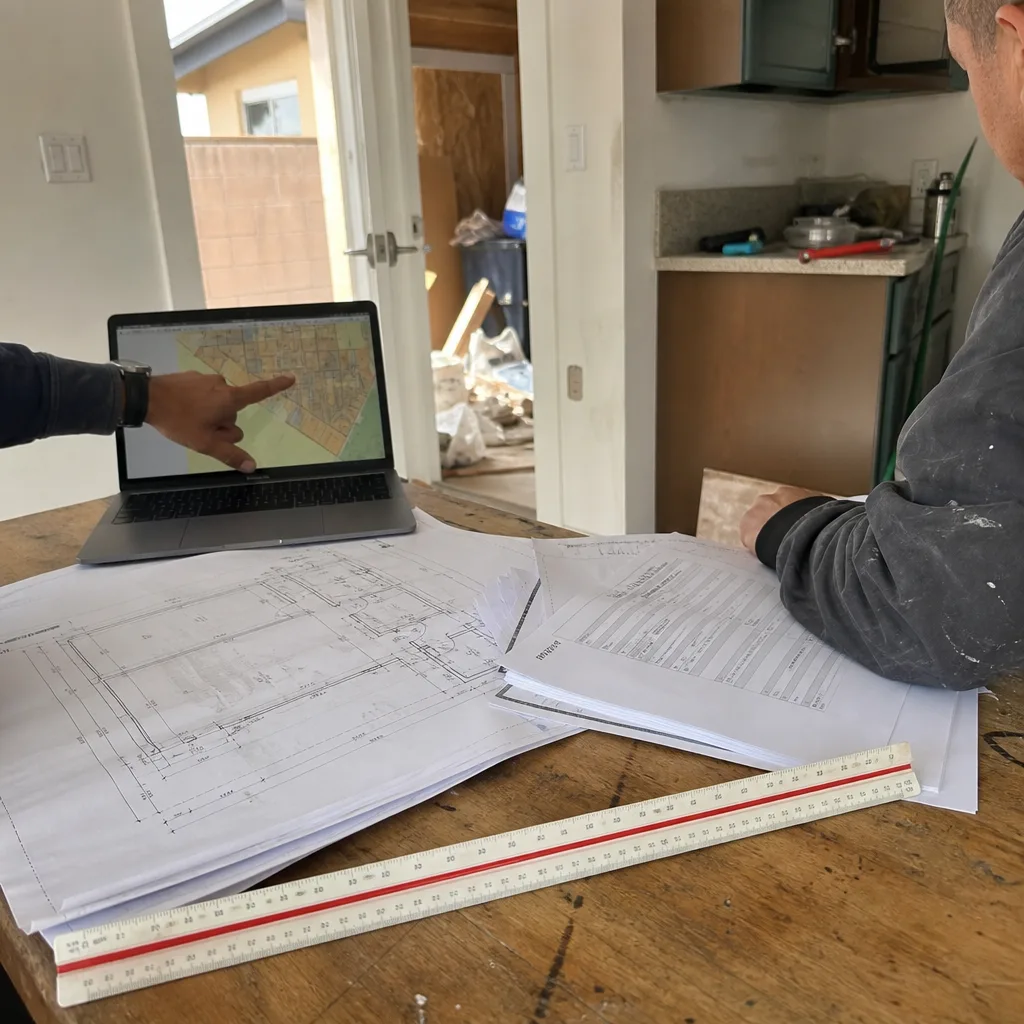
Garden Grove’s ADU activity has attracted operators who understand the demand but not the details. These red flags are specific to what we’ve observed in Orange County permit records and client consultations.
Unlicensed “Permit Runners”
These individuals offer to “handle the permit” for a flat fee, typically $2,000 to $5,000. They are not licensed architects or contractors. They fill out forms using online templates and disappear when the city requests corrections. Garden Grove’s Community Development Department requires stamped drawings for any ADU over 120 square feet. A runner cannot provide these. We’ve been hired to rescue projects where the runner’s submittal was rejected three times and the owner had no recourse.
Driveway Quotes Without a Survey
A legitimate ADU quote requires a site survey showing property lines, easements, and existing setbacks. In Garden Grove’s dense neighborhoods - particularly around Brookhurst Street and Chapman Avenue - many lots have unrecorded utility easements or corner-lot restrictions that don’t appear on Zillow. A contractor who quotes from a 10-minute walkaround is guessing, and the guess will become your change order.
P.O. Box or Virtual Office Listings
Verify the physical address. We’ve seen firms list a Garden Grove location that turns out to be a shared workspace with no staff, no plans library, and no permit-tracking system. The CSLB address check described above catches most of these, but cross-reference with Google Street View. If the “office” is a mailbox store in a strip mall, the firm is likely a broker, not a builder.
Prefab Brokers Without Brand Fluency
Some operators advertise “modular ADUs” but cannot name the specific brands they specify. Ask directly: “Which prefab systems do you coordinate?” If they mention “a company in Texas” or “we’ll find one,” they have no relationship with manufacturers like Boxabl or Plant Prefab and no experience with the delivery, crane, and utility integration these projects require.
Pressure to Sign Before Permit Approval
The most expensive red flag. A construction contract signed before permit approval locks you into a scope that may not match what the city will allow. In Garden Grove, the Planning Division may require parking replacement, landscape modification, or additional fire separation that wasn’t in the original quote. If you’ve already signed, those become change orders. If you haven’t, they become scope revisions before pricing.
Does the Firm Pull Its Own Permits in Garden Grove?
This question sounds technical. It’s actually the single best predictor of whether your project will stall.
Firms that pull their own permits maintain direct relationships with Garden Grove’s Community Development Department and Orange County’s building inspectors. They know which plans examiner reviews ADUs, what corrections that examiner typically requests, and how to format the Title 24 documentation for fastest approval. Firms that subcontract permit pulling to a third party lose this knowledge and add a communication layer that slows every correction cycle.
How to Test This in the Interview
- Ask: “Who submits the permit application - your staff or an outside service?”
- Ask: “When the city requests corrections, who prepares the response?”
- Ask: “How many ADU permits has your firm personally pulled in Garden Grove in the past 24 months?”
- Request: “Can you show me a recent Garden Grove ADU permit set with the city’s approval stamp?” (Redact the client name - you’re verifying process, not prying.)
We’ve maintained our own permit-tracking system since 2015. Every submittal, correction, and approval is logged with timestamps. When Garden Grove updated its ADU ordinance in 2020 and again in 2023, we adjusted our standard details before the city posted formal guidance, because we were in conversation with the staff. A firm that outsources permits learns about changes after they’ve already submitted outdated drawings.
The permit timeline matters for financing. Most construction loans require permit approval before first draw. Every week of permit delay is a week of interest on your land value and a week of rent or use you don’t collect. A firm that controls its own permit process typically achieves Garden Grove approval in 8 to 14 weeks. A firm that delegates often sees 20 to 30 weeks, with no one accountable for the gap.
Reading an ADU Quote: Line Items That Matter
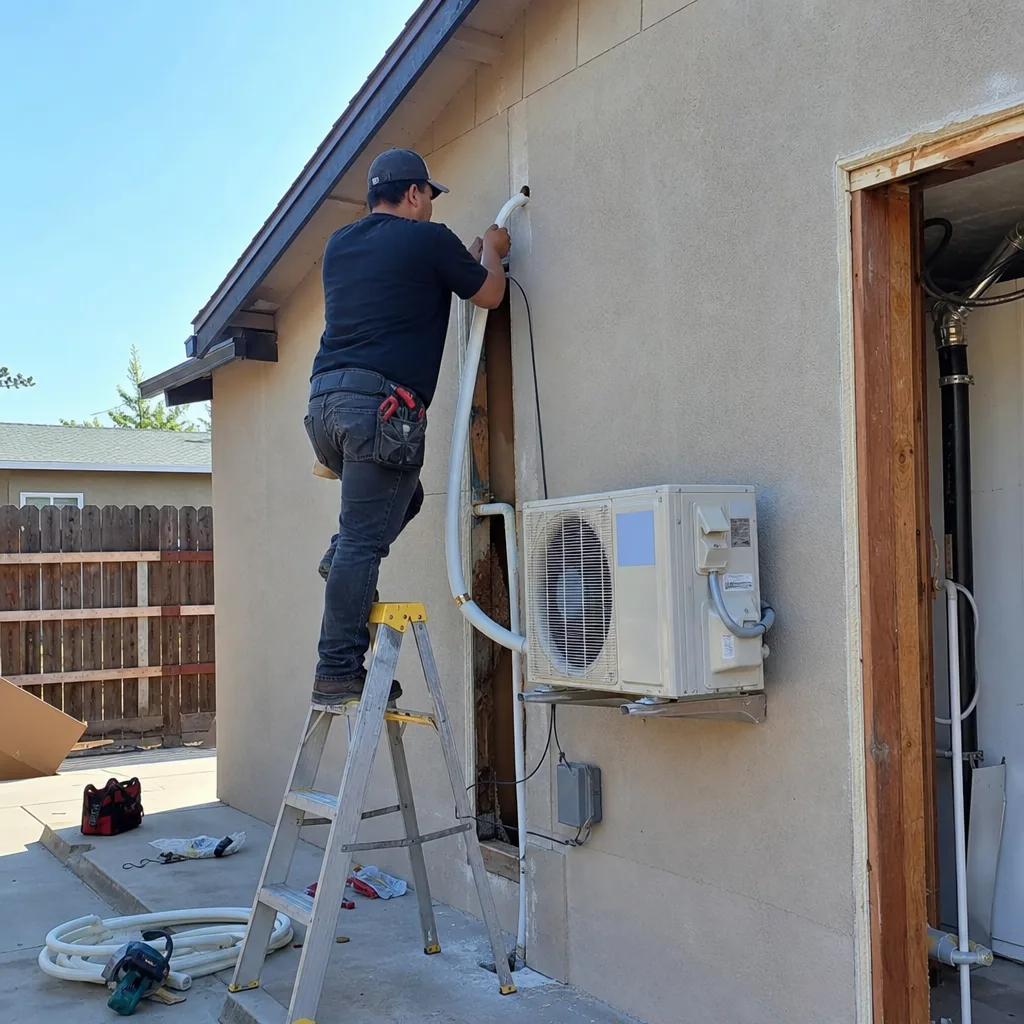
A written price is only as good as the scope it describes. Here’s how to read an ADU quote for structural completeness, with typical Garden Grove ranges based on our project history since 2015 - see our ADU Cost Breakdown: The Garden Grove Homeowner’s Reference for 2026 for detailed line-item guidance.
Garage Conversion ADU
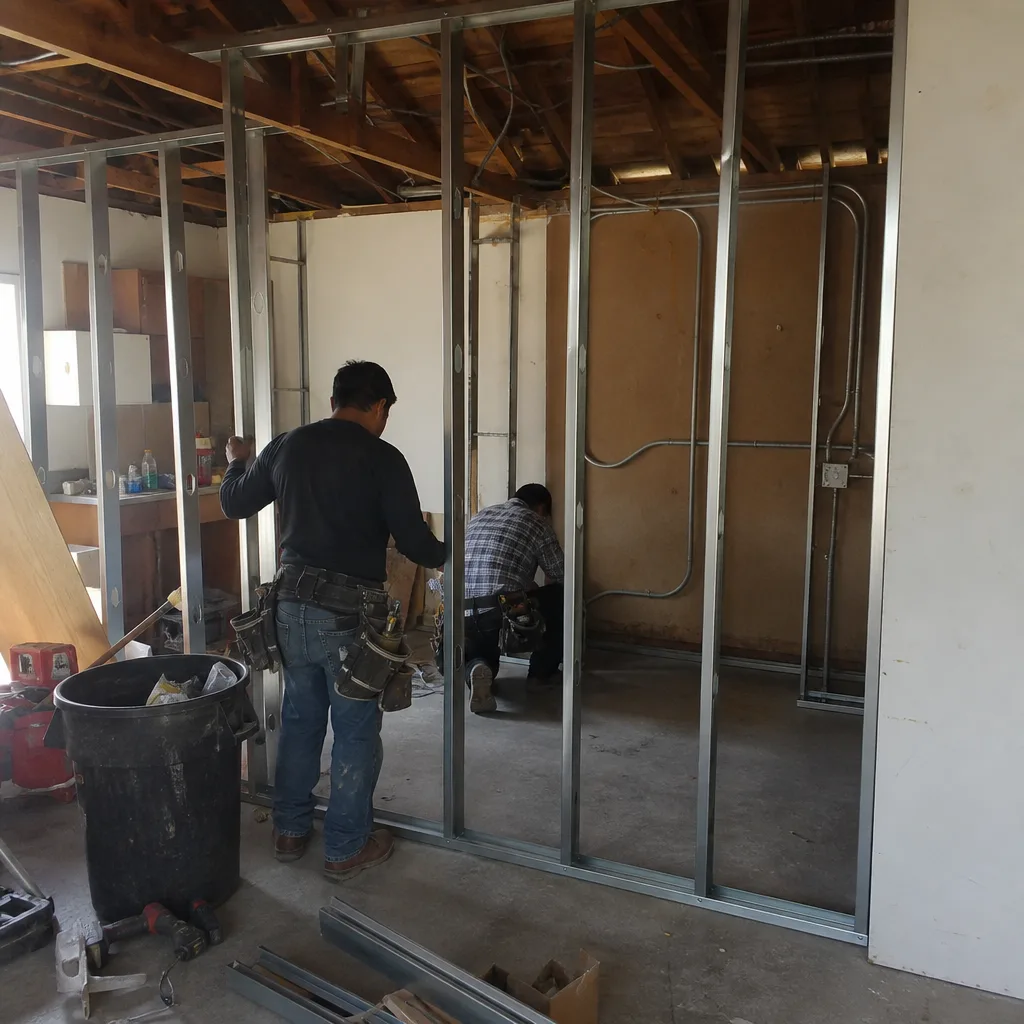
Garage Conversion ADU in Garden Grove projects typically run $85,000-$165,000 all-in, drawings through final inspection. The variance depends on existing slab condition, electrical service capacity, and whether the garage shares a wall with the main house (triggering fire separation requirements). A complete quote should specify:
- Demolition and disposal of existing garage door, hardware, and interior finishes
- Foundation assessment and augmentation (if slab is under 3.5 inches or unreinforced)
- Framing for new window and door openings, with header specifications
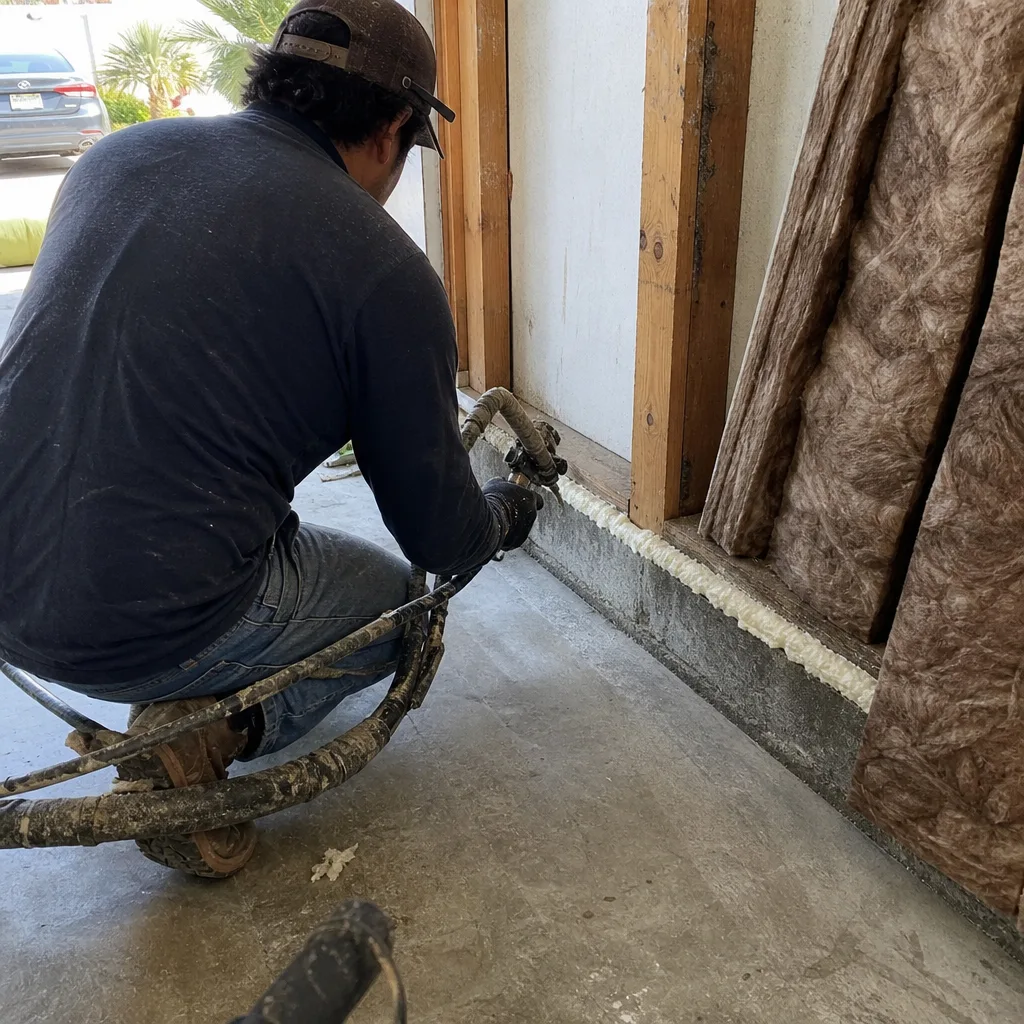
- Insulation to Title 24 standards - typically R-13 walls, R-30 ceiling in Garden Grove’s climate zone
- Electrical service upgrade if existing panel is 100-amp or fully loaded
- Plumbing rough-in and connection to existing sewer lateral (distance matters - older Garden Grove neighborhoods often have clay laterals at 8+ foot depth)
- HVAC: mini-split system with condenser pad and electrical
- Final finishes: flooring, fixtures, appliances (specify grade - builder-grade vs. upgrade)
- Permit fees, plan check, and inspection scheduling
New Detached ADU
New Detached ADU in Garden Grove projects typically run $175,000-$340,000, with the lower end representing modest studio units on straightforward lots and the upper end representing two-bedroom units with full kitchens on sloped or corner lots. Critical line items:
- Site survey and geotechnical report (non-negotiable for new foundation)
- Utility trenching and connection - sewer lateral extension, water service, gas or electric
- Foundation: standard stem wall vs. engineered slab for expansive soils (Garden Grove has localized clay deposits)
- Roofing: composition shingle vs. standing seam metal (affects both price and Title 24 compliance)
- Fire separation and egress per California Residential Code Chapter 3
- Landscaping and hardscape restoration (often omitted, always required)
What a Complete Quote Excludes
Be wary of quotes that note “exclusions” for permit fees, soil testing, or utility connection. These are not extras. They’re core project costs that the firm is shifting to you without a price. Under Haven Standard Clause 5 (No Surprises), every foreseeable cost is in the written scope or explicitly named as a client responsibility with a dollar range.
The Interview Questions That Reveal Experience
Beyond the contract-structure test, these questions surface whether a firm has actually built ADUs in Garden Grove or is adapting general construction experience on your dime.
- “What’s the typical setback for a detached ADU on a standard 6,000-square-foot lot in Garden Grove?” The correct answer references the 2023 Garden Grove ADU ordinance: 4 feet side and rear for units under 800 square feet, with potential reductions for lots with alley access. A firm that says “the state minimum” without citing local variation hasn’t pulled permits here recently.
- “How do you handle the transition from the existing garage slab to new living space floor?” For garage conversions, the answer should mention moisture barrier, insulation placement, and whether the slab requires a floating floor system or direct adhesion. We’ve seen contractors in the Euclid Street corridor pour self-leveling compound without a vapor barrier, trapping moisture that warped flooring within 18 months.
- “What’s your process for Title 24 energy compliance?” The answer should specify software (CBECC-Res, EnergyPro, or equivalent), whether they run calculations in-house or subcontract, and how they address garden Grove’s Climate Zone 8 requirements. A firm that says “the architect handles it” in a design-build model is admitting they don’t integrate design and construction.
- “Can you walk me through a project that went wrong and how you fixed it?” Every firm with actual experience has a story. The ones that claim perfection are either lying or too new to have encountered reality. We once discovered an unmapped sewer easement on a Garden Grove lot after excavation began. We absorbed the redesign cost, rerouted the foundation, and still delivered within the Haven Standard timeline because we’d built contingency into our permit process. A firm that can’t describe a specific problem and specific resolution lacks operational depth.
- “What documentation do I receive at project closeout?” The answer should include: final permit with all inspection sign-offs, as-built drawings showing any field changes, photo record of concealed conditions before close-up, and written warranty documentation. If the firm mentions “a final walkthrough” without listing documents, they’re selling an experience, not a record.
Common Mistakes to Avoid
- Signing a construction contract before permit set completion. This is the error that generates the most litigation in Orange County ADU projects. The scope is undefined, the city’s requirements are unknown, and every correction becomes a negotiation.
- Comparing bids without a standardized scope. If three contractors are pricing different projects, the middle bid isn’t “safe” - it’s just differently wrong. Demand line-item alignment before comparing totals.
- Hiring based on lowest price for the largest project. A $40,000 difference on a $200,000 ADU often indicates omitted scope, not efficiency. In Garden Grove’s competitive market, sustainable margins run 12 to 18 percent. Below that, corners get cut on inspections, materials, or crew retention.
- Ignoring the physical office verification. We’ve consulted with homeowners who discovered their “contractor” was a project broker working from a coffee shop, subcontracting every trade to the lowest bidder with no oversight.
- Accepting verbal promises about timeline. Garden Grove’s permit timeline is knowable. Inspection scheduling is knowable. A firm that won’t commit to written milestones with penalty clauses is planning for flexibility you don’t want them to have.
- Neglecting utility capacity early. Many Garden Grove homes built before 1980 have 100-amp electrical service and clay sewer laterals. A contractor who doesn’t assess these in the first site visit is planning to discover them during construction, when every day of delay costs you.
- Choosing prefab without verifying site coordination experience. Modular units from brands like Mighty Buildings or Boxabl require crane permits, street closure permits, and precise foundation tolerances. A firm that sells “fast modular” without naming specific coordination steps is selling aspiration.
When to Call a Professional
Call a design-build ADU professional when you’ve confirmed your lot qualifies under Garden Grove’s ADU ordinance but before you’ve invested in standalone architectural drawings. The earliest professional involvement preserves the most options and prevents sunk costs in unbuildable designs.
Specifically: call when your survey shows potential setback conflicts, when your electrical panel is original to a pre-1980 home, when your garage slab has visible cracking or slope, or when you’re considering prefab and need to verify crane access and utility routing. These conditions don’t disqualify a project, but they reshape the approach and the price. Discovering them after design is complete forces expensive redesign or accepting risk.
Ellery ADU Studio Garden Grove offers free estimates in Garden Grove - call (657) 567-6590. We also provide a Free Second Opinion on any written estimate already in hand, with no obligation to hire. If the scope is sound, we’ll say so. If it’s missing critical line items, we’ll name them specifically.
Frequently Asked Questions
Garage conversion ADUs in Garden Grove typically range $85,000-$165,000 all-in, while new detached ADUs run $175,000-$340,000 depending on size, site conditions, and finish level. Every Ellery ADU Studio project receives a written price before work begins under Haven Standard Clause 1 - call (657) 567-6590 for a specific quote based on your survey and existing conditions.
Yes. Garden Grove requires building permits for all ADUs, including garage conversions and junior ADUs, with plan review by the Community Development Department. The permit set must include structural calculations, Title 24 energy compliance, and electrical load calculations. A firm that suggests “permit-free” construction or “just a homeowner permit” is misrepresenting California law.
From permit approval, garage conversions typically take 3 to 5 months and new detached ADUs 6 to 10 months in Garden Grove, depending on weather, inspection scheduling, and utility connection complexity. For seasonal considerations that affect scheduling, see our Seasonal ADU Care for Garden Grove: Year-Round Homeowner’s Guide. The permit process itself adds 8 to 14 weeks for firms with direct Garden Grove experience. Total timeline from first meeting to final inspection usually runs 8 to 14 months.
Under Haven Standard Clause 5 (No Surprises), the written scope is locked at signing. Changes occur only if you request them or if concealed conditions differ materially from what the survey and site investigation could reasonably reveal. Even then, we document with photos and provide a written change order before proceeding. Call (657) 567-6590 to review how this applies to your specific property.
Ellery ADU Studio pulls all permits as part of our single-contract design-build service. We maintain direct relationships with Garden Grove’s plans examiners and inspectors, track correction cycles internally, and absorb the administrative time. You receive the approved permit and inspection record at project closeout.
A B-General Building Contractor can perform or supervise all trades involved in ADU construction - structural, electrical, plumbing, HVAC. Specialty contractors (C-10 Electrical, C-36 Plumbing, etc.) are limited to their licensed trade and cannot serve as the prime contractor for a complete ADU. Hiring a specialty contractor as your “ADU builder” means they’re illegally coordinating trades or illegally subcontracting the general work.
The Bottom Line
Hiring an ADU contractor in Garden Grove is not a bidding contest. It’s a contract-structure decision. The firms that deliver finished ADUs on scope and on price are the ones that control design, permit, and construction under one accountable entity, document every assumption before pricing, and verify every credential you could check yourself. Use the CSLB lookup. Visit the office. Demand the permit set before the construction contract. And never accept a price for a scope that doesn’t yet exist.
Written by Nadia Ellery, Owner at Ellery ADU Studio Garden Grove, serving Garden Grove since 2015.